



Decontamination Navigation Menu
- The Metallurgy of Lash Tools: Why Surgical Stainless Steel Stains
- Stage 1: Mechanical Cleaning & Adhesive Dissolution
- Stage 2: Chemical Disinfection (The Danger of Over-Soaking)
- Advanced Tech: The Role of Ultrasonic Cleaners in Lash Salons
- Stage 3: Sterilization (Autoclave vs. Glass Bead Systems)
- The Cross-Contamination Risk: Safe Storage Between Clients
- Tweezer Death: When to Disinfect vs. When to Discard Your Tool
- Comparison Matrix: Chemical Soaking vs. Thermal Autoclave
- Frequently Asked Questions (FAQ)
- Conclusion: Protecting Your Tools Protects Your Clients
⚡ Quick Summary: The "Anti-Rust" Salon Rule
- The Core Problem: Tweezers don't rust because of the disinfectant solution; they rust because of over-soaking (leaving them in chemical liquid past the recommended time) and improper drying before storage.
- The Alignment Risk: Using a razor blade or sandpaper to scrape dried lash adhesive off your tweezers will scratch the protective chromium oxide layer, causing instant oxidation, alignment shifts, and blunt tips.
- The Clinical Standard: A strict 3-stage protocol—adhesive dissolution, monitored chemical immersion (max 10 minutes), and thorough hot-air or autoclave sterilization—is required to protect your tools and your clients.
For a professional lash artist, a high-precision tweezer is not just a basic piece of metal; it is an extension of your hand. Your isolation speed, fan creation, and overall treatment timing depend heavily on the alignment and grip of your tools. However, one of the most common complaints in high-end salons is that expensive tweezers quickly become dull, stained, or rusted after a few rounds of sanitization. Understanding the science of medical-grade hygiene without compromising your tool's structural integrity is crucial when purchasing and maintaining professional tweezers and scissors.
This evidence-based protocol outlines the exact steps needed to eliminate pathogens, viruses, and bacteria in your workspace while preserving the pristine factory alignment and finish of your metal investments.
The Metallurgy of Lash Tools: Why Surgical Stainless Steel Stains
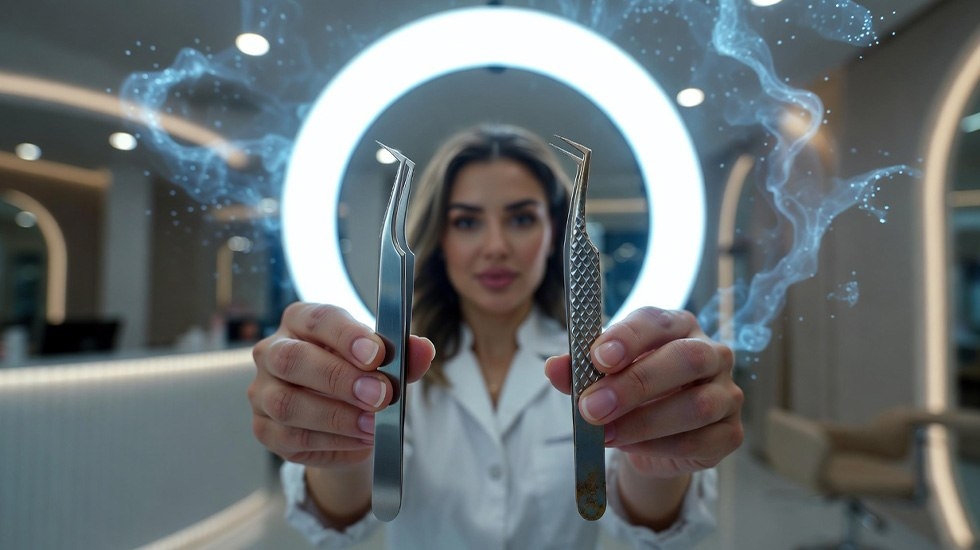
Most professional extension tools are manufactured from high-grade surgical stainless steel, typically utilizing 410 or 420 martensitic steel grades. A common misconception running rampant throughout the beauty industry is that the word "stainless" implies the metal is an impenetrable, completely immune barrier against corrosion and pitting. In physiological reality, stainless steel is a precise metal alloy that contains a minimum of 10.5% chromium alongside raw iron and carbon.
The magic happens on a molecular level: when the chromium within the steel is exposed to atmospheric oxygen, it undergoes a natural chemical reaction. It forms an invisible, microscopic, and self-healing layer of chromium oxide ($Cr_2O_3$) across the entire surface of the tweezer. This ultra-thin passivation layer acts as a permanent defensive shield, blocking ambient moisture, environmental salts, and harsh salon chemicals from ever reaching or reacting with the highly unstable raw iron molecules resting underneath.
When you introduce harsh mechanical abrasives, leave your instruments submerged in stagnant water pools, or implement highly corrosive chemical solutions, you actively strip away and dissolve this microscopic passivation shield. Once the chromium oxide layer is structurally penetrated, atmospheric moisture, humidity, and chemical salts immediately assault the exposed iron atoms. This triggers an oxidation reaction that creates hydrated iron(III) oxide—otherwise known as rust.
This deep chemical oxidation ruins the factory-polished, smooth surface texture of the metalware. Under microscopic inspection, a rusted tweezer tip displays jagged craters and rough edges. This physical degradation causes ultra-fine eyelash extensions to snag, warp, or completely slip out of your grasp during delicate micro-adjustments and volume fan isolation protocols.
The Hidden Chemical Risk of Martensitic Steel
Because 410 and 420 grades of surgical steel contain higher carbon contents to ensure the tips stay perfectly sharp and hold their alignment under constant pressure, they are naturally more susceptible to chemical attack than lower-grade steels. This means that a single instance of chemical neglect or improper drying can compromise your volume tweezers permanently, causing a microscopic structural shift that alters the tool's tension calibration.
Stage 1: Mechanical Cleaning & Adhesive Dissolution
An absolute, non-negotiable rule of salon hygiene states that decontamination must always begin with a thorough, rigorous physical cleaning. You cannot disinfect or sterilize an object that is covered in physical debris or organic matter. If there are residual microscopic droplets of cured cyanoacrylate (lash extension glue), cosmetic buildup, or dead skin sebum dried onto the precision tip of your isolation tool, pathogenic microorganisms will burrow beneath those crusts. This creates an impenetrable biological shield that completely blocks your disinfecting liquids and thermal heat waves from sanitizing the instrument.
The Golden Clinical Rule: Never scrape your instruments. Using nail clippers, scissors, or industrial razor blades to scrape dried lash adhesive off your tweezer tips creates deep, microscopic gouges and micro-fractures in the steel body. These tiny scratches ruin the flush contact point of your tool and become immediate breeding grounds for bacterial biofilms that resist standard cleaning.
Instead, utilize a dedicated acetone-infused professional tweezer cleanser or a targeted chemical adhesive remover liquid. Submerge only the working tips of your tool into the solvent for 3 to 5 seconds to dissolve the cyanoacrylate bonds completely without stripping the metal's outer finish. Once the glue softens, wipe the tips cleanly and firmly away using an un-shredded, lint-free microfiber wipe. Investing in premium, robust metalware like the Premium Tweezer Volume & Isolation Set ensures that the steel can handle repeated chemical adhesive removals without losing its factory-calibrated spring tension and tactile feedback.
Stage 2: Chemical Disinfection (The Danger of Over-Soaking)
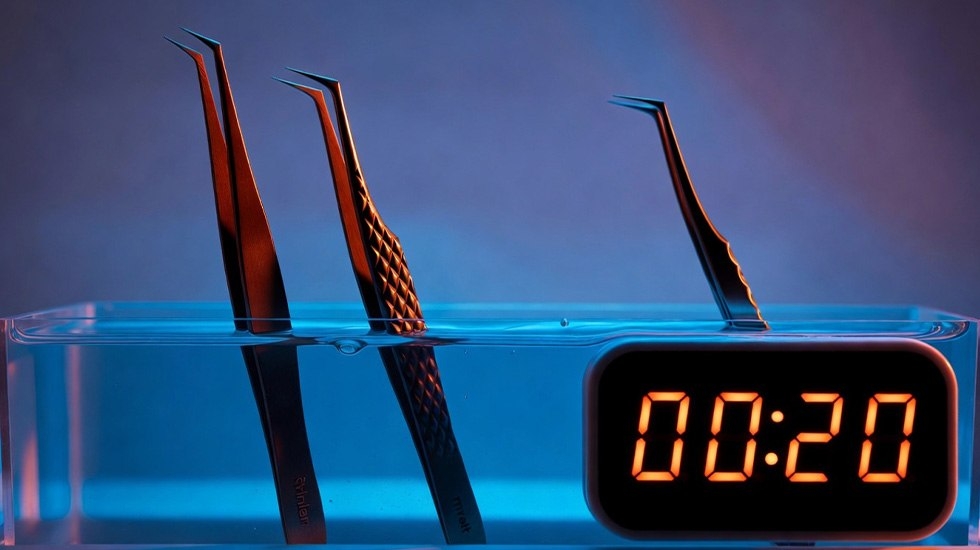
Once the precision tools are completely free of visible glue, cosmetic pigments, and organic matter, they are ready to enter the chemical disinfection phase. It is vital to note that this specific step is where over 90% of tool corrosion and structural degradation occurs in the modern salon environment. Many well-meaning lash artists place their steel instruments into a glass jar filled with Barbicide or a similar hospital-grade liquid disinfectant and leave them submerged for hours, through entire client rotations, or even overnight.
This prolonged immersion is catastrophic for high-end precision steel instruments. Hospital-grade chemical disinfectants are highly concentrated, ultra-potent alkaline or acidic formulations engineered to neutralize bloodborne pathogens, pseudomonas, and fungi within a very specific, strictly timed window—which is exactly 10 minutes for optimal efficacy. Leaving your surgical steel tools submerged past the manufacturer's directed timeframe allows the chemical agents to slowly eat away, pit, and dissolve the protective chromium oxide layer, permanently dulling the fine tips.
The 3-Step Precision Timing Protocol
To eliminate 99.9% of pathogenetic risks without causing a fraction of metal oxidation, salon staff must implement a timed, rigid chemical protocol at their workstations:
- The Timing Step: Fully submerge the cleaned tweezers into your prepared disinfectant solution for exactly 10 minutes. Do not guess the duration; you must set a digital countdown timer at your lash station the moment the metal contacts the liquid.
- The Rinsing Step: Remove the instruments immediately when the alarm sounds. Use sterile tongs to lift them out, and rinse the tweezers thoroughly under a stream of cold, running purified water. This step is critical to strip away any remaining chemical surfactants that would otherwise dry onto the steel and cause chemical pitting.
- The Dehydration Step: Pat the metal completely dry using a clean, lint-free disposable paper towel. Following this, use a handheld electronic styling fan to drive away any trapped moisture from the interior hinge, pivot points, and micro-grooves. Lingering water droplets trapped inside the tight hinge area are the number one cause of deep structural rust formation in salon tools.
Advanced Tech: The Role of Ultrasonic Cleaners in Lash Salons
An increasing number of premium lash lounges are introducing ultrasonic cleaning tanks into their hygiene workflow. An ultrasonic cleaner is not a disinfector or a sterilizer; it is an advanced mechanical cleaning tool. It works through high-frequency sound waves that create microscopic vacuum bubbles in the liquid—a process known as cavitation.
These tiny bubbles implode against the surgical steel body, blasting away microscopic skin oils, cosmetics, and invisible bio-debris from areas that a manual brush can never reach, such as the interior pivot hinges or laser-etched grids on diamond-tip volume tweezers. For optimal results without corrosion risk, run your tweezers through a 3-minute ultrasonic cycle using distilled water and a dedicated enzymatic instrument cleaner, then dry completely before proceeding to thermal sterilization.
Stage 3: Sterilization (Autoclave vs. Glass Bead Systems)
While high-level chemical disinfection successfully eradicates vegetative bacteria, fungi, and lipid-enveloped viruses, it is completely incapable of destroying highly resilient, hard-shelled bacterial spores. To reach the gold standard of clinical hygiene required for complete ocular safety, your professional tools must undergo a final stage of sterilization. This advanced step is an absolute medical necessity if your tweezers have accidentally come into direct contact with a client's broken skin barrier, micro-tears on the eyelid margin, or weeping eye fluids caused by underlying ocular conditions like active blepharitis, dry eye syndrome, or conjunctivitis.
For high-volume commercial salons, a dental-grade autoclave that utilizes saturated, pressurized steam heat is the safest, most reliable method available. However, for immediate workstation decontamination between back-to-back clients, many lash bars utilize dry-heat glass bead sterilizers. When operating a glass bead system, you must ensure the tweezer tips are 100% clean and dry before insertion, as any moisture will cause the hot glass beads to fuse to the steel surface.
Insert only the working end (the bottom one-third) of the tweezer directly into the pre-heated glass beads for exactly 15 to 30 seconds at a regulated temperature of 250°C. Avoid submerging the entire tool body, as excessive thermal exposure can relax the internal alignment of the spring steel, causing the tweezer to lose its perfect closure tension. To maintain a sterile environment throughout this process, ensure your salon is fully stocked with medical-grade sanitization pouches, heat-resistant tool trays, and protective silicone tip guards by exploring our dedicated line of premium lash and brow application accessories to elevate your daily workspace hygiene protocols.
The Cross-Contamination Risk: Safe Storage Between Clients
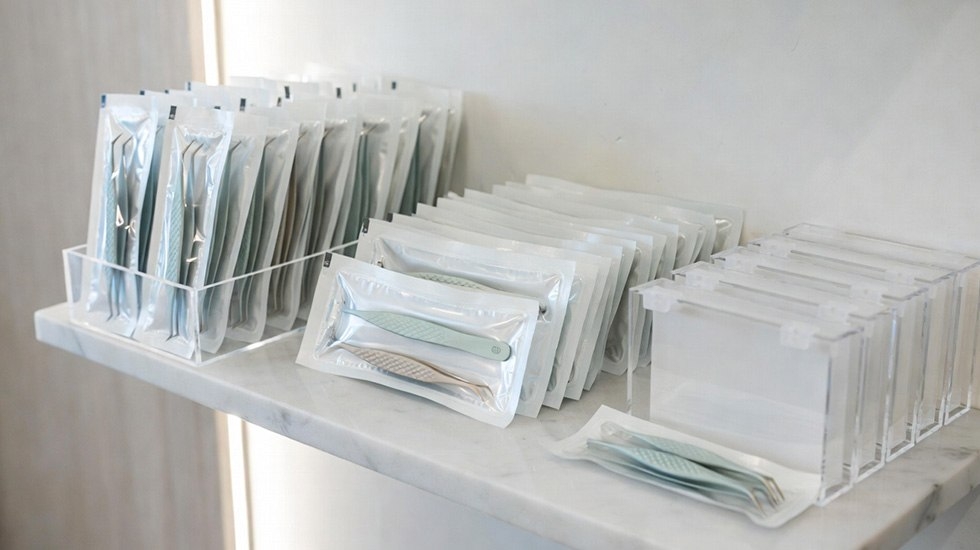
Sterilizing your tweezers is completely pointless if you place them directly back into a contaminated workspace drawer or an open air container exposed to airborne pathogens. Cross-contamination occurs most frequently during tool storage. Once your instruments emerge from the hot-air oven or autoclave, they must remain protected inside sealed environments until the exact moment your client lays on the treatment bed.
Professional protocols mandate storing sterilized tweezers inside airtight, UV-protected acrylic cases or specialized metal enclosures. Never leave the fine tips exposed; always apply clean, sanitized silicone tip protectors to maintain the structural alignment. If using sterilization pouches, do not break the medical seal until you are sitting in front of your client—this transparent display of hygiene directly elevates your salon’s authority and trust factors.
Tweezer Death: When to Disinfect vs. When to Discard Your Tool
Surgical steel is incredibly resilient, but it does not last forever. Every tool eventually reaches a state known as structural fatigue. Repeated heat exposure from autoclaves or dry-heat sterilizers slightly relaxes the steel molecules over time. If your volume tweezers suddenly require double the finger pressure to close, or if you notice handmade 0.03mm mega-volume fans consistently slipping through the "sweet spot," the tool has lost its calibration.
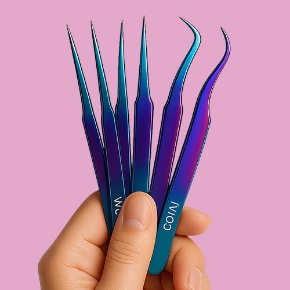
Furthermore, if you spot deep pitting, black pitting scars, or flaking layers on coated or rainbow-tinted tweezers, the metal is structurally compromised. These pitting craters harbor bacteria that chemical disinfectants cannot reach. At this stage, no amount of sanitization can make the tool safe or efficient. A professional lash artist must recognize this "tweezer death" and discard the tool immediately to safeguard treatment speed and client health.
Comparison Matrix: Chemical Soaking vs. Thermal Autoclave
To help salon owners balance time efficiency with tool preservation, this matrix details how each decontamination method affects steel longevity:
| Method Type | Target Pathogens | Corrosion Risk Level | Best Practice Protocol |
|---|---|---|---|
| Chemical Immersion (Barbicide) | Bacteria, Fungi, Viruses (No Spores) | High (If soaked past 10 minutes) | Immerse for 10 minutes max, rinse instantly, and blow-dry. |
| Pressurized Steam (Autoclave) | All Pathogens + Bacterial Spores | Low (If dried during cycle) | Place in sterilization pouches; ensure dry cycle completes fully. |
| Dry Heat (Glass Beads) | Surface Pathogens & Spores | Medium (Can weaken metal tension) | Insert tips only for 15-30 seconds. Avoid touching the structural hinge. |
Frequently Asked Questions (FAQ)
Can I use standard isopropyl rubbing alcohol to sterilize my tweezers?
No. Rubbing alcohol (70-90% Isopropyl) is a low-to-medium level disinfectant, not a sterilizer. It will sanitize the surface by killing most active bacteria, but it is entirely incapable of destroying resilient bacterial spores or hard-shelled viruses. Additionally, wiping with alcohol leaves moisture behind that can settle into the pivot point, encouraging hidden rust.
Why did my volume tweezers lose their grip after a heat sterilization cycle?
If you submerge the entire body of a volume tweezer into a dry heat glass bead sterilizer, or expose it to extreme temperatures for too long, you can alter the metal's tempering. Excessive heat can relax the internal spring steel molecules, reducing the tool's tension and alignment, causing your handmade volume fans to fall apart upon pickup.
How can I safely clean plasma-coated or colored tweezers?
Tweezers with a colored, rainbow, or matte black plasma coating require extreme care. Harsh chemical solvents or long chemical baths will dissolve or peel the aesthetic coating. For colored tools, limit chemical immersion to the bare minimum required for hygiene, or switch to premium uncoated surgical stainless steel for intensive medical sterilization cycles.
Conclusion: Protecting Your Tools Protects Your Clients
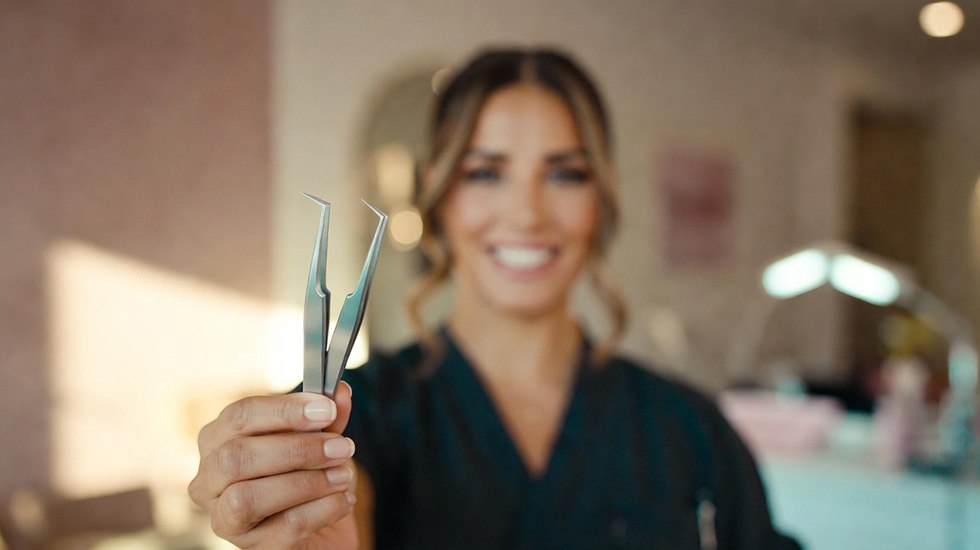
A flawless lash application is impossible without clean, sharp, and perfectly balanced tools. By shifting your salon culture from passive, unmonitored soaking to a highly deliberate, timed 3-stage decontamination protocol, you protect both the safety of your clients and the longevity of your elite metal investments. True mastery of the craft begins with flawless hygiene science.
Ready to equip your salon with high-performance, clinical-grade metalware that withstands rigorous sterilization? Explore our specialized collection of elite steel instrumentation and application accessories directly through Winlash, and elevate your workspace to an uncompromising global standard of health and beauty excellence.