

RSS

Blog posts of '2026' 'January'

Are False Lashes Reusable? Ultimate Guide to Types, Care, and Longevity
Quick Access
  1. What Are False Lashes and Why Do People Use Them?
  2. Are False Lashes Reusable? Breaking Down the Facts
  3. Factors That Affect the Reusability of False Lashes
  4. Step-by-Step Guide: How to Clean and Reuse False Lashes
  5. Common Mistakes to Avoid When Reusing False Lashes
  6. Pros and Cons of Reusable False Lashes
  7. Comparing Reusable False Lashes to Other Lash Enhancement Options
  8. Myths and Facts About Reusing False Lashes
  9. User Experiences and Tips from Beauty Enthusiasts
  10. FAQs on Reusable False Lashes
  11. Conclusion: Embrace Reusability for Sustainable Beauty

In the world of beauty enhancements, false lashes have become a go-to for achieving dramatic, fluttery eyes without committing to more permanent solutions. But one common question arises: are false lashes reusable? The answer is a resounding yes, with most high-quality options designed for multiple wears when cared for properly. This makes them an accessible entry point for lash enthusiasts exploring temporary boosts before considering professional eyelash extensions, which offer longer-lasting results through expert application.

Whether you're a makeup novice or a seasoned pro, understanding the reusability of false lashes can save you money, reduce waste, and elevate your routine. In this in-depth article, we'll dive into everything you need to know—from the basics of false lash types to expert cleaning tips, comparisons with other lash options, and more. By the end, you'll be equipped to make informed choices that align with your beauty goals.

What Are False Lashes and Why Do People Use Them?

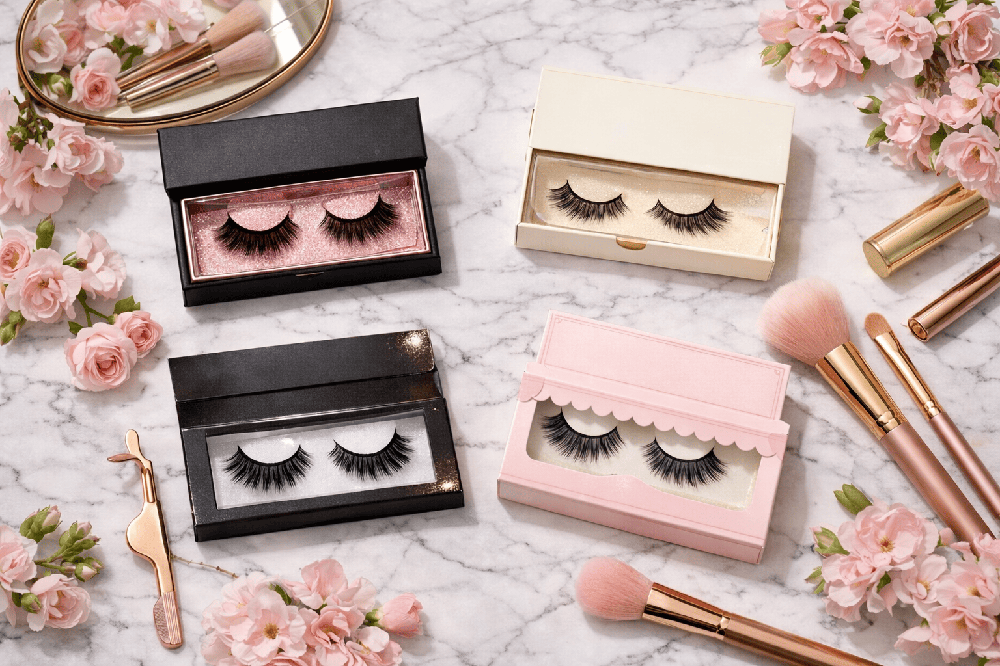
Reusable false lashes on model showing natural fluttery look

False lashes, also known as fake eyelashes or falsies, are synthetic or natural hair strips, clusters, or individuals attached to your natural lashes to enhance volume, length, and curl. They've evolved from Hollywood's golden era staples to everyday essentials, thanks to innovations in materials and adhesives.

The Evolution of False Lashes

Historically, false lashes date back to the early 1900s, popularized by silent film stars who needed exaggerated features for the camera. Over the decades, they've transformed from cumbersome, heavy attachments to lightweight, comfortable designs. Today, the market is flooded with options ranging from affordable drugstore buys to luxury brands. According to beauty industry reports, the global false eyelashes market is projected to grow significantly, driven by social media trends and the rise of at-home beauty routines. This growth underscores the appeal of reusable false eyelashes as a versatile, non-committal alternative to invasive procedures. Innovations like magnetic technology and eco-friendly materials have further boosted their popularity, making them a staple in modern makeup kits.

People turn to false lashes for various reasons: quick transformations for events, experimenting with looks without damage to natural lashes, or simply boosting confidence. Unlike mascara, which can clump or flake, falsies provide instant drama. But the key to their popularity lies in reusability—why buy new pairs when you can extend the life of your favorites? This aspect not only makes them cost-effective but also aligns with growing consumer interest in sustainable beauty practices.

Different Materials Used in False Lashes

The material plays a pivotal role in how reusable false lashes can be. Synthetic fibers, often made from plastic or nylon, are budget-friendly and durable, lasting up to 10-15 uses. They hold their shape well and are resistant to water, making them ideal for everyday wear. Mink lashes, sourced from mink fur (or faux mink for ethical alternatives), offer a soft, natural look and can be reused 20-30 times with gentle handling. Faux mink options have gained traction for their cruelty-free appeal while mimicking the luxurious feel. Silk lashes strike a balance, mimicking natural hair while holding up to 15-25 wears. They're lightweight and provide a glossy finish that enhances eye makeup looks.

Human hair lashes are another premium choice, blending seamlessly but requiring more care to prevent shedding. They offer the most natural appearance but can be prone to losing shape if not stored properly. Regardless of material, quality matters—investing in well-made pairs from reputable brands ensures better longevity and reduces irritation risks. When selecting materials, consider your skin sensitivity and lifestyle to maximize the benefits of reusable false eyelashes.

Are False Lashes Reusable? Breaking Down the Facts

How many times can you reuse false lashes - comparison chart

To directly address the core query: yes, most false lashes are reusable. However, not all are created equal. Single-use lashes exist for one-time events, but the majority—especially strip and magnetic varieties—are built for repeated applications. This reusability factor makes them eco-friendly and economical, appealing to environmentally conscious consumers who want to minimize beauty waste.

How Many Times Can You Reuse False Lashes?

On average, you can reuse false eyelashes 5-20 times, though some users report up to 30-60 wears for top-tier products. Factors like adhesive type, wear frequency, and maintenance routines influence this. For instance, strip lashes from brands like Ardell or Eylure often last 10-15 applications, while magnetic lashes (which skip glue altogether) can exceed 30 uses since there's no residue buildup. The key is consistent care; neglecting cleaning can cut this number in half.

Real-world examples abound: beauty influencers on platforms like TikTok share tutorials where they revive lashes after 20 wears, proving that with proper care, reusability isn't just a claim—it's achievable. Keep in mind, cheaper options might only manage 3-5 uses before the band warps or fibers fray. To get the most out of your lashes, track usage and inspect for signs of wear, such as loosening hairs or a stiff band.

Types of False Lashes and Their Reusability

Not all false lashes offer the same level of reusability. Let's explore the main categories:

TypeDescriptionAverage ReusesBest For
Strip LashesFull-band falsies applied along the lash line10-20+Beginners and everyday looks
Cluster LashesSmall groups for customizable volume15-25Hybrid styles and piecemeal application
Individual LashesSingle flares glued to natural lashes5-10Precise, natural enhancements
Magnetic LashesMagnet-based, no-glue options30-60Glue-free convenience and longevity

Strip lashes are the classic full-band falsies applied along the lash line. Reusable strip lashes dominate the market, with many designed for 10-20+ uses. Their band flexibility allows reshaping after cleaning, making them ideal for beginners wondering how to reuse fake lashes multiple times.

Cluster lashes consist of small groups of lashes bonded together, offering customizable volume. They're highly reusable, often lasting 15-25 applications if removed carefully. Unlike full strips, clusters can be reapplied piecemeal, extending their life even further and allowing for targeted enhancements.

Individuals are single flares or fans glued directly to natural lashes. While reusable in theory (up to 5-10 times), they're trickier due to their delicate nature. They're a step toward semi-permanent looks but require precision for repeated use to avoid damaging natural lashes.

A game-changer for reusability, magnetic lashes use tiny magnets instead of glue. Brands like Glamnetic promote them as reusable up to 60 times, free from adhesive damage. This makes them perfect for those asking, "Can you reuse false eyelashes without glue issues?" Their ease of use has made them a favorite for frequent wearers.

Each type caters to different preferences, but all emphasize the importance of gentle handling to maximize wears.

Factors That Affect the Reusability of False Lashes

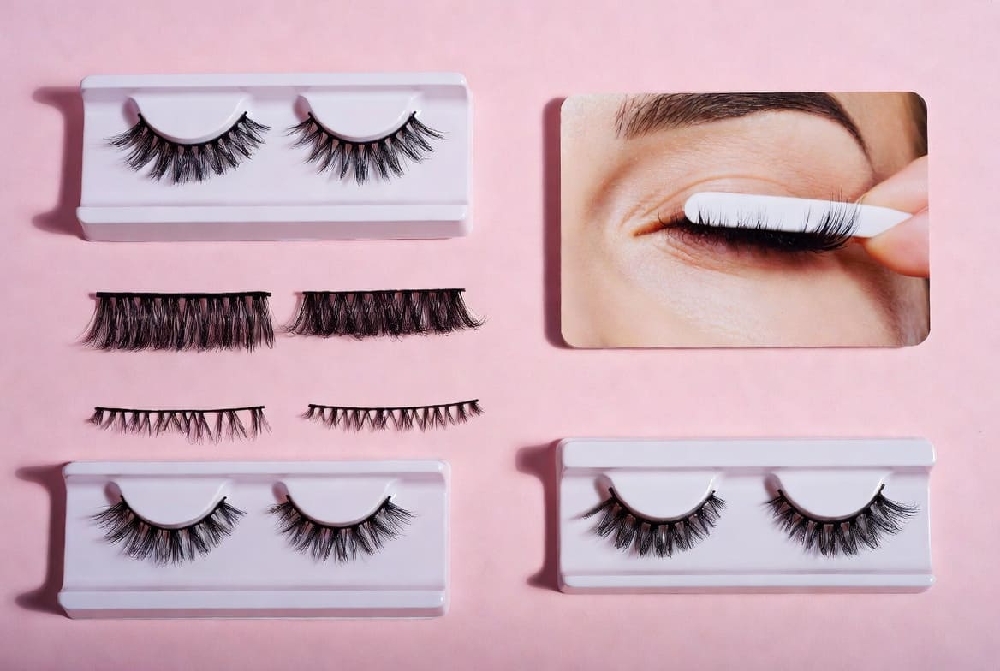
Close-up of premium reusable false eyelashes with clean band

Reusability isn't guaranteed—it's earned through mindful practices. Several elements determine how long your lashes last.

Quality of the Lashes

High-end lashes use superior materials that resist wear and tear. Look for reinforced bands and hypoallergenic fibers that prevent breakage. Budget lashes might save money upfront but often fail after a few uses, leading to more frequent replacements and potentially higher long-term costs. Investing in quality ensures not only longevity but also comfort during wear.

Adhesive Used

The glue matters immensely. Water-based or latex-free adhesives are easier to remove, preserving the lashes without leaving behind sticky residues that can attract dirt. Harsh glues can leave stubborn residue, shortening lifespan. For reusable false eyelashes, opt for removers that dissolve adhesive without damaging fibers, such as oil-free formulas that gently break down the bond.

Frequency of Use and Handling

Daily wear accelerates degradation, while occasional use extends life. Rough removal—tugging or peeling harshly—can bend bands or pull out hairs, making lashes unusable sooner. Always handle with clean tweezers or fingers for longevity, and avoid touching the fibers directly to prevent oil transfer from your skin.

Environmental Factors

Humidity, dust, and storage conditions play roles. Storing in a dry, airtight case prevents curling or contamination that could lead to mold or brittleness. Exposure to makeup oils or sweat during wear can also impact reusability, so consider using a setting spray or primer to protect them in humid environments.

By addressing these, you can significantly boost how many times you can reuse false lashes.

Step-by-Step Guide: How to Clean and Reuse False Lashes

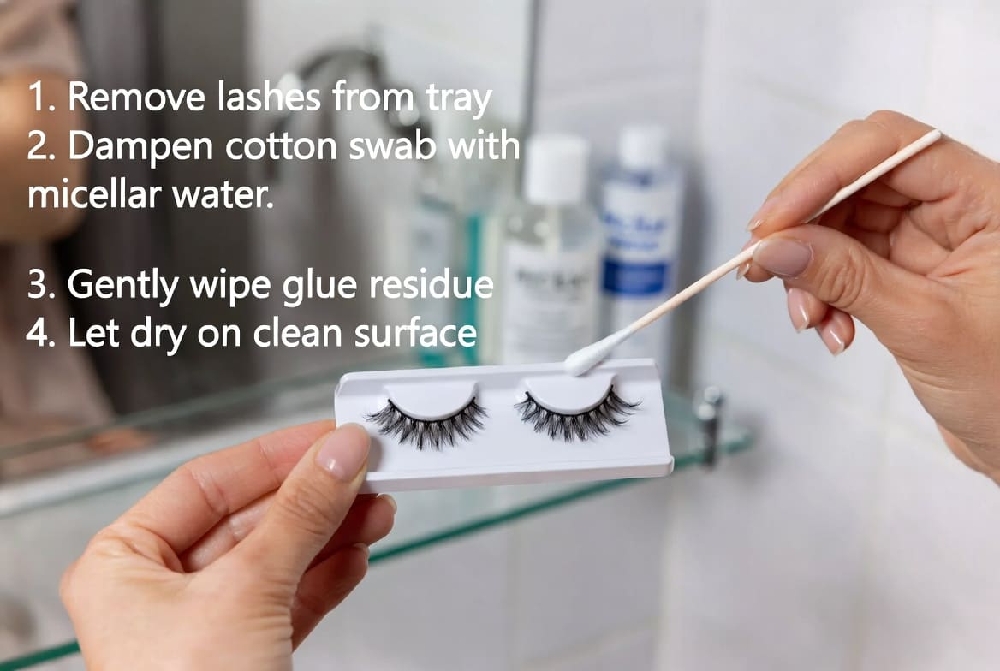
Step-by-step guide how to clean and reuse false eyelashes

Proper cleaning is the cornerstone of reusing false lashes. Neglect it, and bacteria buildup can cause eye infections or premature wear. Here's a detailed, foolproof method to keep your lashes in top condition.

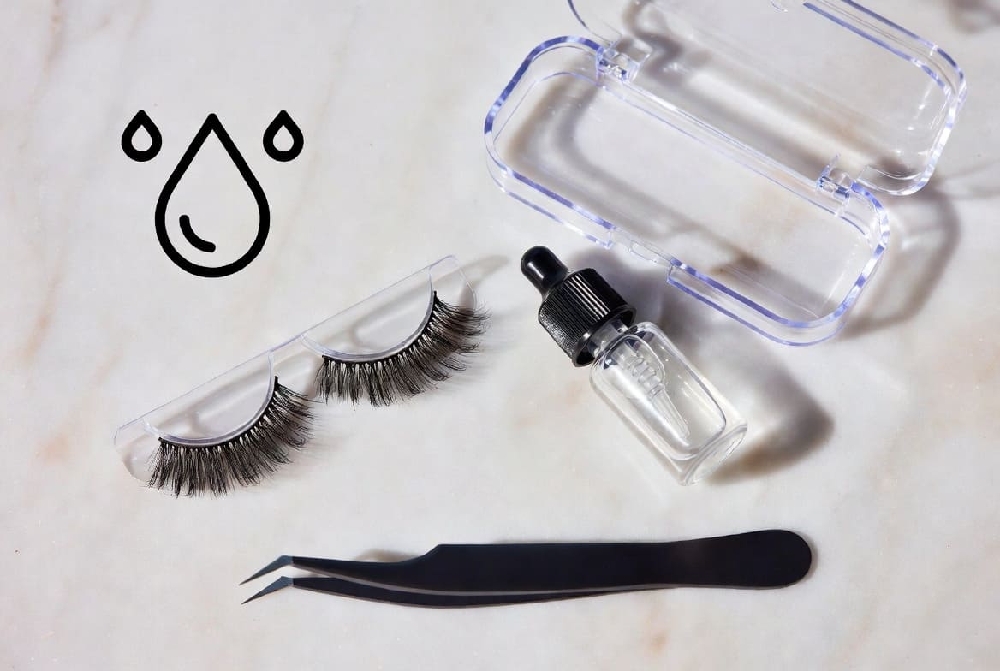
Tools You'll Need

- Micellar water or oil-free makeup remover for gentle dissolution of glue

- Cotton swabs or Q-tips for precise cleaning

- Mild soap or lash cleanser to remove mascara and oils

- Tweezers for handling without direct contact

- A clean towel or tissue for drying

- Storage case to maintain shape post-cleaning

Removal Process

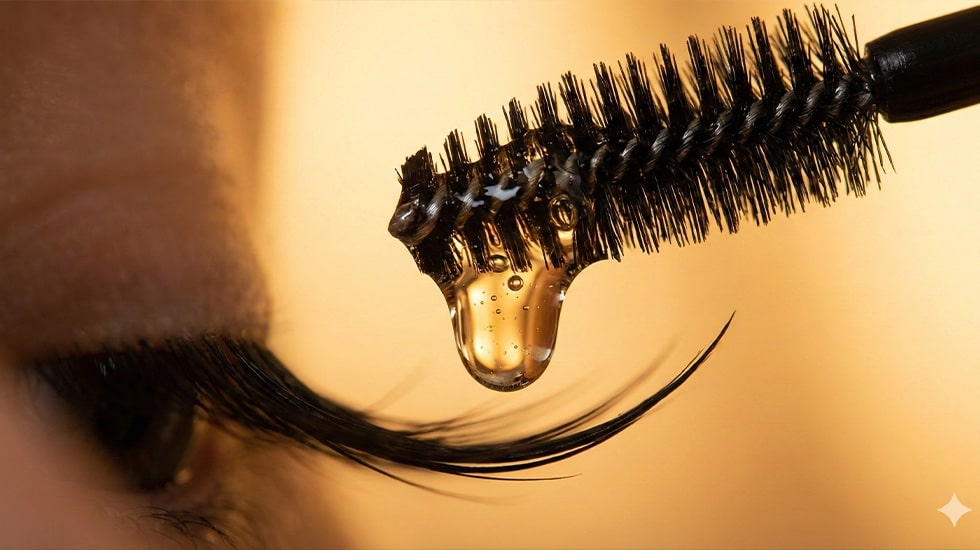
Start by softening the adhesive. Apply remover to a cotton pad and gently press along the lash line for 30-60 seconds. Peel from the outer corner inward, avoiding pulls that could damage the band. If resistance occurs, apply more remover and wait longer to ensure a smooth removal.

Cleaning Steps

1. Remove Glue Residue: Use tweezers to pick off large chunks. Dip a swab in micellar water and swipe along the band to loosen any remaining adhesive.

2. Soak and Wash: For synthetic lashes, soak in warm soapy water for 5 minutes. Gently agitate with fingers to dislodge debris. Rinse thoroughly under cool water to remove soap.

3. Disinfect: Spritz with 70% isopropyl alcohol (diluted) for hygiene, especially if reusing frequently. This step helps prevent bacterial growth.

4. Dry and Reshape: Lay flat on a tissue to air-dry overnight. Use a spoolie to comb through and restore curl, ensuring the lashes look as good as new.

For mink or silk, skip soaking—opt for spot-cleaning to prevent matting and preserve the natural texture.

Storage Tips for Longevity

Store in the original tray to maintain shape and prevent dust accumulation. Avoid direct sunlight or humid areas that could cause warping. Label pairs by use count to track reusability and rotate between multiple sets to give each pair time to recover between wears.

Following this routine ensures your lashes stay fresh and reusable, answering "how to clean and reuse false eyelashes" effectively.

Common Mistakes to Avoid When Reusing False Lashes

Even with the best intentions, pitfalls can shorten lash life. Here's what not to do to keep your reusable false lashes in optimal condition.

Overusing Adhesive

Applying too much glue creates buildup that's hard to remove, leading to clumping and potential damage during cleaning. Use a thin line for easy cleanup and better adhesion without excess.

Improper Drying

Rubbing lashes dry can fray fibers and distort the shape. Always air-dry naturally on a flat surface to preserve the curl and integrity of the lashes.

Ignoring Hygiene

Reusing without cleaning invites infections and reduces lifespan. Sanitize after every 2-3 wears to remove bacteria and oils that accumulate from skin contact.

Forcing Reuse Beyond Limits

Know when to retire lashes—if they're shedding or warped, it's time for new ones to avoid eye irritation or uneven application. Continuing to use worn-out pairs can lead to discomfort and suboptimal results.

Avoiding these ensures safe, effective reusability.

Pros and Cons of Reusable False Lashes

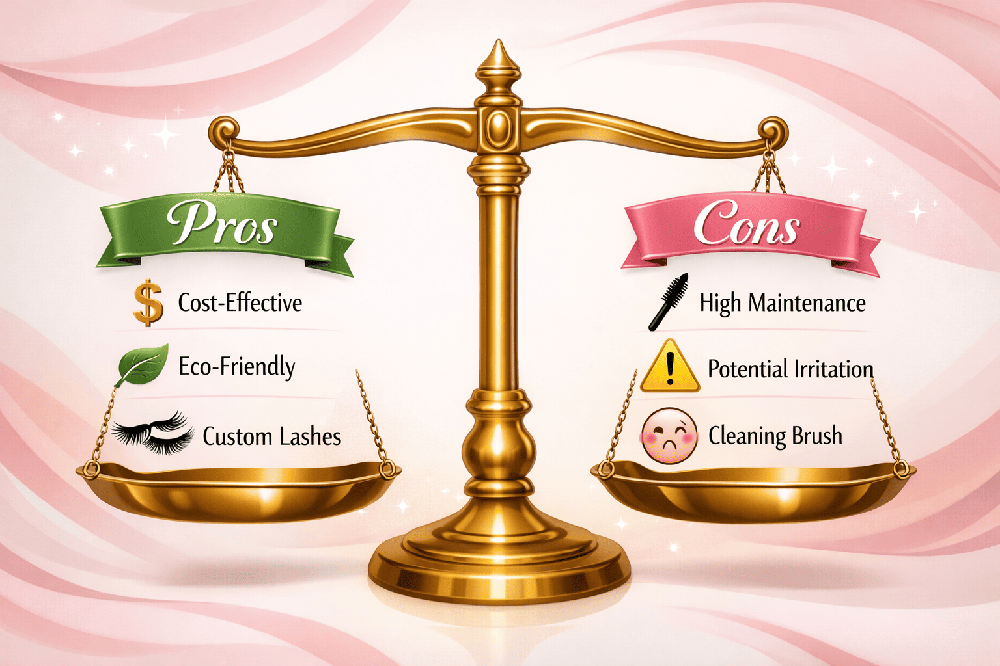
Benefits of reusable false lashes - eco-friendly and cost saving

Like any beauty tool, reusable false lashes have upsides and drawbacks. Understanding both sides helps in making an informed decision.

Advantages

  • - Cost-Effective: One pair can replace multiple disposables, saving money over time by reducing the need for frequent purchases.
  • - Eco-Friendly: Reduces plastic waste compared to single-use options, supporting sustainable beauty habits.
  • - Customizable: Easy to trim or layer for personalized looks that match different occasions or moods.
  • - Convenient: Quick application for on-the-go enhancements, perfect for busy lifestyles.

Disadvantages

  • - Maintenance Required: Cleaning takes time and effort, which might deter those seeking low-effort options.
  • - Potential Irritation: Poor-quality adhesives can cause allergies or redness if not chosen carefully.
  • - Limited Durability: Not as long-lasting as professional alternatives like extensions, requiring eventual replacement.
  • - Learning Curve: Beginners may struggle with application, leading to frustration in the early stages.

Weighing these helps decide if reusable lashes fit your lifestyle.

Comparing Reusable False Lashes to Other Lash Enhancement Options

While false lashes shine in reusability, they're not the only game in town. Let's compare them to popular alternatives to see where they stand.

False Lashes vs. Mascara and Lash Serums

Mascara offers temporary volume but can weigh down lashes and requires daily removal. Serums promote natural growth over weeks but lack instant results and may not deliver dramatic changes for everyone. Reusable falsies bridge the gap, providing drama without daily commitment and allowing for removal at the end of the day.

False Lashes vs. Lash Lifts and Tints

Lash lifts curl and tint natural lashes for 6-8 weeks, but they're not reusable in the same sense and limit style changes. Falsies allow style changes per wear, offering more versatility for experimenting with different volumes and lengths.

In the middle of exploring lash options, it's worth noting that for those seeking semi-permanent solutions, professional tools like eyelash extension glue and liquids ensure secure, long-lasting bonds. Similarly, cluster lashes provide a hybrid approach, blending reusability with customizable extension-like effects.

When to Choose Extensions Over Reusable Falsies

Extensions involve gluing individual fibers to natural lashes, lasting 4-6 weeks with fills. They're ideal for low-maintenance routines but require salon visits and can be costly over time. Reusable false lashes suit DIY enthusiasts, serving as a trial before committing to extensions, especially for those testing out enhanced looks without permanence.

Myths and Facts About Reusing False Lashes

Myth: All false lashes are single-use. Fact: Most are reusable with care, designed specifically for multiple applications when maintained properly.

Myth: Cleaning ruins lashes. Fact: Proper methods enhance longevity by removing buildup that could otherwise cause damage over time.

Myth: Reusable means unlimited. Fact: Material limits apply—monitor for wear like shedding or loss of curl to know when to replace.

Myth: Magnetic lashes aren't as effective. Fact: They often outlast glued options due to no adhesive residue, providing reliable hold and reusability.

Myth: Reusing causes eye infections automatically. Fact: With regular sanitization, risks are minimal, similar to any reusable beauty tool.

Dispelling these ensures informed use and helps users get the most from their lashes.

User Experiences and Tips from Beauty Enthusiasts

Real results wearing reusable false lashes multiple times

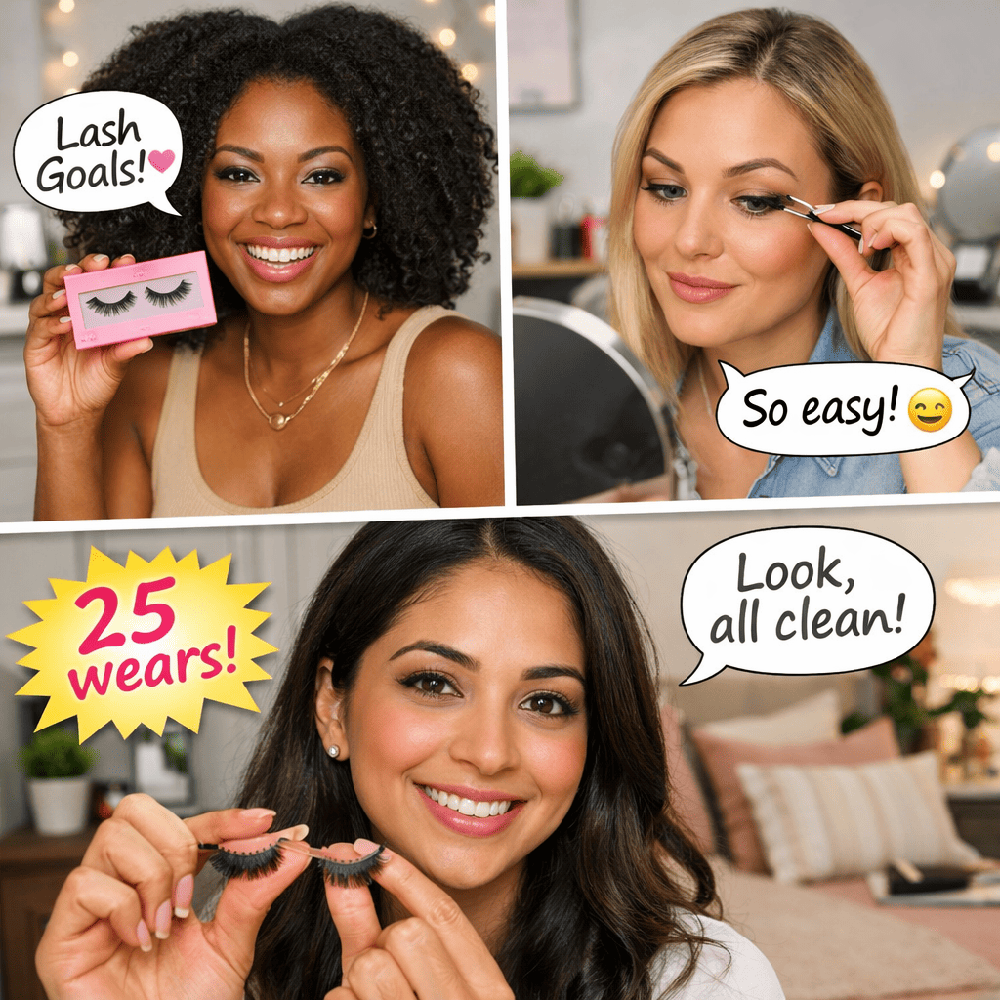
From forums and social media, users share success stories that highlight practical ways to extend lash life. One Reddit user reused strip lashes 25 times by storing in a lash book, which keeps them organized and protected from dust. Another shared on Instagram how alternating between pairs allows each set to "rest," preventing overuse.

A TikTok creator demonstrated using baby shampoo for gentle cleaning, noting it removes mascara without stripping natural oils from mink lashes. Experts recommend patch-testing adhesives to avoid reactions and rotating pairs to extend overall use. Beauty bloggers often advise investing in a lash comb to maintain shape after each wear, ensuring they look fresh every time.

These real-life insights show that with community-shared techniques, achieving high reusability is accessible for everyone.

FAQs on Reusable False Lashes

How to Make False Lashes Last Longer?

Consistent cleaning and proper storage are key, along with gentle handling and using quality adhesives to minimize damage.

Are Strip Lashes Reusable?

Yes, typically 10-20 times with careful maintenance and reshaping after each use.

Can You Reuse Ardell False Lashes?

Absolutely, with many users getting 15+ wears by following brand-recommended cleaning routines.

False Lashes Reusable vs. Single Use: What's the Difference?

Reusable have durable bands built for multiple applications; single-use are thinner for one wear and lack reinforcement.

Best Reusable False Eyelashes 2026?

Look for magnetic or silk varieties from trusted brands like Glamnetic or Velour for optimal longevity and style options.

Conclusion: Embrace Reusability for Sustainable Beauty

Beautiful fluttery eyes with reusable false eyelashes 2026

In summary, false lashes are indeed reusable, offering a practical way to enhance your eyes repeatedly. By mastering care techniques and choosing quality pairs, you can enjoy fluttery lashes without constant repurchases. For those ready to elevate their routine, explore professional options that build on this foundation. Visit the WinLash homepage for a full range of lash solutions tailored to your needs.

Do Eyelashes Grow Back? The Definitive Guide to Lash Regrowth and Recovery in Dubai
Quick Access to Article Topics (Click to Open)
  1. Understanding the Anatomy: The Eyelash Growth Cycle
  2. Scenario Analysis: How You Lost the Lash Matters
  3. The Regrowth Timeline: A Quick Comparison
  4. Accelerating the Process: How to Speed Up Lash Growth
  5. Scientific Insight: What Experts Say
  6. Advanced Recovery: Lash Lifts and Lamination
  7. Myths vs. Facts: Clearing the Confusion
  8. Conclusion

Imagine looking in the mirror and noticing a gap in your lash line. Whether it was an accidental slip with the eyelash curler, a lash extension mishap, or simply shedding, the immediate panic is universal. The burning question that follows is simple yet stressful: Do eyelashes grow back?.

The short answer is yes. Just like the hair on your head, eyelashes go through a natural growth cycle. However, the speed and quality of that regrowth depend heavily on how the lash was lost and how you treat the follicle afterward. Living in Dubai, where humidity, air conditioning, and frequent cosmetic treatments are part of daily life, understanding lash health is vital.

In this comprehensive guide, we will explore the science of the lash cycle, address specific scenarios like burnt or cut lashes, and outline a recovery protocol using premium beauty care products to restore your flutter.


1. Understanding the Anatomy: The Eyelash Growth Cycle

Detailed diagram of the eyelash growth cycle phases: Anagen, Catagen, and Telogen

To understand regrowth, we must first understand how lashes exist. Your eyelids typically house between 100 to 150 lashes on the upper lid and about 50 to 75 on the lower lid. They don't all grow at once; otherwise, they would all fall out at once! They operate on a three-phase cycle.

Phase 1: Anagen (Active Growth)

This is the phase where the lash is actively growing from the follicle. It lasts between 30 to 45 days. Only about 40% of your upper lashes are in this phase at any given time. If a lash falls out or is pulled out during this phase, it won't grow back immediately because the follicle needs to finish the cycle.

Phase 2: Catagen (Transition)

This is a short transitional stage lasting 2 to 3 weeks. The lash stops growing, and the follicle shrinks. If a lash falls out during the Catagen phase, it won’t grow back until the cycle completes and enters the Anagen phase again.

Phase 3: Telogen (Resting)

This is the resting phase, which can last more than 100 days. The lash sits in the follicle until it naturally falls out (shedding) or is pushed out by a new hair.

Key Takeaway: Because each individual lash is in a different phase, you don't lose them all at once. However, trauma to the eye area can disrupt this rhythm.


2. Scenario Analysis: How You Lost the Lash Matters

Analysis of different scenarios for lash loss: pulling, cutting, or burning eyelashes

The query "do eyelashes grow back" often comes with a specific "if" or "after." The mechanism of loss dictates the timeline of recovery. We have analyzed the most common situations based on search data.

Scenario A: Do Eyelashes Grow Back If You Pull Them Out?

A very common concern is "do eyelashes grow back if you pull them out". Whether it is due to stress-related habits (Trichotillomania) or an aggressive removal of makeup, pulling a lash out by the root is traumatic for the follicle.

  • The Reality: Yes, they will grow back, but it takes the longest time compared to other scenarios.
  • The Timeline: Since the hair shaft has been ripped from the root, the follicle must reset and start the Anagen phase from scratch. This can take anywhere from 6 weeks to 3 months.
  • The Risk: Chronic pulling can lead to traction alopecia, where the follicle becomes scarred and stops producing hair permanently.

Scenario B: Do Eyelashes Grow Back If Cut?

Accidents happen. Maybe you were trimming your bangs or trying to customize false lashes and snipped your natural ones. The query "do eyelashes grow back if cut" is surprisingly frequent.

  • The Reality: Absolutely. This is the fastest recovery scenario.
  • The Timeline: You haven't damaged the follicle; you've just shortened the shaft. The lash will continue to grow according to its normal cycle. You will likely see them return to full length within 2 to 4 weeks.
  • The Texture: Cut lashes may appear blunt and thicker at the tip initially, losing their natural tapered look until they shed and are replaced by new ones.

Scenario C: Do Eyelashes Grow Back If Burnt?

Lighting a candle or standing too close to a BBQ grill in the Dubai winter can lead to singed lashes. "Do eyelashes grow back if burnt" depends on the severity of the burn.

  • The Reality: If only the hair shaft was singed (the tips are curly and brittle), they will shed and regrow naturally. If the heat burned the eyelid skin and scarred the follicle, regrowth might be compromised.
  • The Timeline: For singed tips, typical regrowth is 4 to 6 weeks.

Scenario D: Do Eyelashes Grow Back After Lash Extensions?

Lash extensions are incredibly popular in the UAE. However, improper application or removal often leads to the search: "do eyelashes grow back after lash extensions".

  • The Reality: Extensions themselves do not stop growth. However, heavy extensions can cause tension on the natural lash, causing it to fall out prematurely.
  • The Fix: A "lash detox" period combined with strengthening serums is usually required to repair the natural lash line.

3. The Regrowth Timeline: A Quick Comparison

Comparison table showing regrowth timelines for natural shedding and traumatic lash loss

To give you a clear expectation of recovery, here is a breakdown of estimated timelines based on the cause of loss.

Cause of LossDamage LevelEstimated Regrowth TimeRequired Action
Natural SheddingNone (Normal)Immediate replacementMaintenance
Cutting / TrimmingLow (Shaft only)2 - 4 WeeksPatience
Singing / BurningModerate4 - 6 WeeksMoisturizing
Lash ExtensionsModerate to High1 - 3 MonthsSerums & Rest
Pulling / PluckingHigh (Root trauma)2 - 4 MonthsStop Pulling & Treat

4. Accelerating the Process: How to Speed Up Lash Growth

While you cannot change your genetics, you can create the optimal environment for your lashes to return thicker and faster. This involves a two-pronged approach: external hygiene and internal/external nourishment.

Step 1: The Foundation is Hygiene

Blocked follicles cannot produce healthy hair. Makeup residue, dead skin, and oil can clog the lash base, leading to blepharitis (inflammation) which stunts growth.

Using a specialized cleanser is non-negotiable. Regular face wash is often too harsh for the eyes or too oily for lash health. We recommend using a dedicated foam that balances pH levels without stripping natural oils.

Recommended Product: My Lamination Cleansing Foam 4in1. This product cleanses, degreases, and disinfects, ensuring your follicles are breathing and ready to grow.

Step 2: External Nourishment (The Serum Strategy)

Applying eyelash growth serum with Vitamin C and Keratin to nourish hair follicles

Once clean, the follicles need fuel. Vitamin-enriched serums penetrate the hair shaft to repair damage and stimulate the root.

  • Vitamin C & E: Essential for preventing oxidative stress on the lashes.
  • Keratin: The building block of hair.

Recommended Product: My Lamination Vitamin Lash Brow Serum 10 ml. This serum is specifically formulated to target the Anagen phase, encouraging longer and denser growth.

Step 3: Internal Strength (Biotin)

Sometimes, weak lashes are a sign of internal deficiency. Biotin (Vitamin B7) is famous for hair and nail health. While you can get it from eggs and nuts, a topical application ensures the nutrient goes exactly where it's needed.

Recommended Product: My Lamination Biotin Lash Brow Serum. Pairing this with the vitamin serum creates a powerhouse duo for recovery, especially if you have pulled your lashes out.


5. Scientific Insight: What Experts Say

It is important to rely on verified information. According to the American Academy of Ophthalmology, eyelashes serve a protective function, keeping debris out of the eye. Their studies confirm that while mechanical damage (rubbing, pulling) can temporarily stop growth, the follicle has a remarkable ability to regenerate unless significant scarring occurs.


6. Advanced Recovery: Lash Lifts and Lamination

If your lashes have grown back but look straight, messy, or downward-pointing (common after regrowth from being cut or burnt), you might be tempted to use a mechanical curler. Stop. Mechanical curlers can cause breakage on fresh, baby lashes.

Instead, consider a professional Lash Lift or Lamination. These treatments use chemical solutions to lift and curl the lashes from the root, making them appear longer without adding the weight of extensions. This is often the best "rehab" look while you wait for full density to return.

For salon owners or DIY enthusiasts trained in these procedures, using high-quality lifting products is crucial to prevent chemical frying of the new lashes.

Explore Options: Lash & Brow Lift Products. These professional kits are designed to alter the shape of the lash while infusing it with nourishing keratin, effectively styling and treating the lash simultaneously.


7. Myths vs. Facts: Clearing the Confusion

Debunking common myths about eyelash growth and vaseline usage

In the panic of losing lashes, many people turn to "kitchen remedies." Let’s debunk a few.

Myth: "Vaseline makes lashes grow longer."

Fact: Vaseline (Petroleum Jelly) is an occlusive. It seals in moisture, which can make lashes look healthier, but it contains no active ingredients to stimulate growth. It can also cause milia (white cysts) around the eyes if used heavily.

Myth: "Cutting lashes makes them grow back thicker."

Fact: This is an optical illusion. The tapered tip is gone, so the blunt end looks thicker, but the actual diameter of the hair has not changed.

Myth: "If you pull a gray lash, two will grow back."

Fact: Scientifically impossible. One follicle produces one hair.


8. Conclusion: Patience is Your Best Beauty Tool

So, do eyelashes grow back?. Yes, they do. Whether you are recovering from a trichotillomania episode, an accidental burn, or just a bad set of extensions, your body is designed to heal.

The key to rapid recovery lies in how you treat your eyes during the regrowth phase. Avoid waterproof mascaras that require rubbing, put down the mechanical curler, and invest in a high-quality hygiene and serum routine.

By combining gentle cleansing with potent ingredients like Biotin and Vitamins, you can turn a 3-month wait into a 6-week recovery. For the best in lash health, from serums to professional lifting kits, trust Winlash to guide you back to your best look.

How to Use Vitamin C Serum for Radiant Skin in Dubai |The Ultimate Guide
Quick Access to Article Topics (Click to Open)
  1. Why Vitamin C? The Science of Radiance
  2. Step-by-Step: How to Use Vitamin C Serum on Face
  3. Targeted Treatments: Beyond the Face
  4. The Dubai Protocol: L-Ascorbic Acid in the Heat
  5. Advanced Application: Vitamin C and Derma Rolling
  6. Targeting Specific Concerns: Dark Circles & Wrinkles
  7. Morning vs. Night Debate
  8. Integrating Professional Lash and Brow Health
  9. External Validation & Comparison
  10. How to Use Vitamin C for Skin Whitening
  11. Managing Side Effects
  12. FAQ: Everything You Need to Know

In the sun-drenched landscape of the UAE, where the intense heat and high UV index are part of daily life, maintaining a flawless complexion is both a priority and a challenge. To combat environmental stressors and achieve that coveted "Dubai Glow," savvy beauty enthusiasts are turning to potent beauty care products that offer more than just surface-level hydration.

At the heart of this skincare revolution is a powerhouse ingredient: Vitamin C. Whether you are looking to brighten your skin, reduce the appearance of fine lines, or protect against pollution in Downtown Dubai, knowing how to use vitamin c serum correctly is the secret to unlocking its full potential.

In this exhaustive guide, we will explore the science, the application techniques, and the essential pairings that will transform your skin from dull to dazzling.


Why Vitamin C? The Science of Radiance and Protection

Vitamin C serum bottle glowing with radiance benefits for skin protection against UV rays

Vitamin C, specifically in its most potent form known as L-ascorbic acid, is a legendary antioxidant that dermatologists swear by. But what exactly are the vitamin c serum benefits that make it so popular?

1. Neutralizing Free Radicals

The environment in Dubai, with its high levels of humidity and urban pollution, generates free radicals—unstable molecules that damage skin cells. Vitamin C acts as a shield, neutralizing these molecules before they can cause oxidative stress.

2. Skin Whitening and Brightening

One of the most searched queries is how to use vitamin c for skin whitening or vitamin c for skin lightening. Vitamin C inhibits the production of tyrosinase, an enzyme that helps produce melanin. This leads to a more even skin tone and a visible reduction in dark spots.

3. Collagen Synthesis and Anti-Aging

As we age, collagen production slows down, leading to wrinkles. Using a vitamin c serum for wrinkles is highly effective because it is a vital co-factor for the two enzymes required for collagen synthesis. This helps keep the skin firm and youthful.


Step-by-Step: How to Use Vitamin C Serum on Face Correctly

To get the most out of your vitamin c serum for face, timing and sequence are everything. Follow this expert-approved routine to ensure maximum absorption and minimal irritation.

Step 1: Cleanse Thoroughly

Start with a clean canvas. Use a gentle cleanser to remove oil, sweat, and Dubai’s dust from your pores. This ensures that the serum can penetrate deep into the dermis rather than sitting on top of debris.

Step 2: Tone (Optional)

If you use a toner, apply it now. A toner can help balance your skin’s pH, making it more receptive to active ingredients.

Step 3: Apply the Vitamin C Serum

Apply 3-5 drops of serum to your face and neck.

  • Pro Tip: Gently pat the serum into the skin rather than rubbing it vigorously.
  • Timing: Many wonder when and how to use vitamin c serum. While it can be used at night, most experts recommend morning application to take advantage of its antioxidant protection during the day.

Step 4: Wait and Absorb

Give the serum about 1-2 minutes to fully absorb. If you apply the next layer too quickly, you might dilute the potency of the L-ascorbic acid.

Step 5: Layering with Hyaluronic Acid

If you are wondering how to use hyaluronic acid and vitamin c serum, the rule is simple: Vitamin C first, then Hyaluronic Acid. Vitamin C works on the cellular level, while Hyaluronic Acid acts as a moisture magnet to plump the skin's surface.

Step 6: Moisturize and Seal

Lock in the active ingredients with a good moisturizer. This creates a barrier that prevents the serum from evaporating.

Step 7: SPF – The Non-Negotiable Step

If you are applying Vitamin C in the morning, SPF is mandatory. Vitamin C makes your skin slightly more sensitive to the sun, and the harsh UAE sun can quickly undo all your hard work if you aren't protected.


Targeted Treatments: Beyond the Face

Applying vitamin-enriched serum to eyelashes and eyebrows for growth and nourishment

While facial serums are vital, the "Vitamin Glow" isn't just for your skin. The same principles of nourishment and protection apply to your lashes and brows, which are often exposed to the same environmental stressors.

For those looking to integrate vitamin-rich formulas into their total beauty routine, specialized products can bridge the gap:

  • My Lamination Vitamin Lash Brow Serum: A daily treatment that brings the power of vitamins to your hair follicles.
  • My Lamination Biotin Lash Brow Serum: Perfect for those needing extra strength and growth stimulation.
  • My Lamination Vitamin Lash Brow Botox: A professional-grade sachet for intense nourishment.

The Dubai Protocol: L-Ascorbic Acid in the Heat

Living in the UAE presents a unique set of challenges for skincare. The combination of intense ultraviolet radiation, high humidity, and ubiquitous air conditioning can strip the skin of its natural defenses. Understanding how to use vitamin c serum in this specific environment is not just about aesthetics—it is about cellular protection.

The Science of Stability

When discussing l ascorbic acid benefits, we are referring to the most biologically active form of Vitamin C. However, L-ascorbic acid is notoriously unstable. In the high temperatures of Dubai, your serum can oxidize quickly, turning from a clear or light straw color to a dark orange or brown.

How to Prevent Oxidation in the UAE

  1. Storage is Key: Do not leave your serum in a sunlit bathroom. Store it in a cool, dark drawer or even a dedicated skincare fridge.
  2. Air Exposure: Keep the lid tightly sealed. Every second the bottle is open, oxygen is degrading the formula.
  3. Check the Color: If your serum has turned dark brown, it has oxidized. Using oxidized Vitamin C can actually increase free radical damage rather than preventing it.

Advanced Application: Vitamin C and Derma Rolling

For those seeking professional-grade results at home, many ask how to use derma roller with vitamin c serum. Derma rolling (microneedling) creates micro-channels in the skin, which can significantly increase the absorption of active ingredients.

The Winlash Safety Protocol for Microneedling:

  • Do not apply a highly acidic Vitamin C serum immediately after rolling, as this can cause severe stinging and inflammation.
  • Wait: It is often safer to derma roll at night and apply your Vitamin C the following morning once the micro-channels have begun to close.
  • Purity Matters: Ensure the serum is free from fragrances and heavy preservatives when using it in conjunction with microneedling.

Targeting Specific Concerns: Dark Circles and Wrinkles

Vitamin C is a multi-tasking hero. If you are struggling with tired eyes after a long week in the city, knowing how to use vitamin c serum for dark circles can be a game-changer.

1. Brightening the Under-Eye Area

The skin under the eyes is thin and prone to showing blood vessels (vascular dark circles) or pigmentation. Vitamin C strengthens this delicate skin by promoting collagen production and lightening the pigment.
Pro Tip: Look for eye-specific serums that combine Vitamin C with caffeine for a de-puffing effect.

2. Smoothing the Sands of Time

Using a vitamin c serum for wrinkles works by neutralizing the enzymes that break down collagen. Over time, consistent use leads to a "bouncy" skin texture that is resilient against the aging effects of the desert sun.


The Morning vs. Night Debate: When and How to Use Vitamin C Serum

Comparison of morning vs night skincare routine for applying Vitamin C serum

While the primary recommendation is morning use for protection, some prefer how to use vitamin c serum on face at night to aid in repair.

  • Morning (Defense): When used under SPF, Vitamin C boosts the effectiveness of your sunscreen by mopping up any UV rays that manage to penetrate the barrier.
  • Night (Repair): At night, your skin is in "rest and repair" mode. If you are not using a Retinol, applying Vitamin C at night allows the vitamin c benefits for skin to work uninterrupted by environmental pollutants.

Integrating Professional Lash and Brow Health

Just as Vitamin C revitalizes the skin, your lashes and brows require targeted nutrients to stay lush and thick, especially when exposed to the salt and chlorine of Dubai’s luxury pools.

To complement your skincare, consider these high-performance treatments from Winlash:


External Validation & Comparison

The efficacy of topical Vitamin C is well-documented in clinical literature. According to a study published in the Journal of Clinical and Aesthetic Dermatology, topical antioxidants like L-ascorbic acid are essential for photoprotection and the reversal of photoaging, particularly in regions with high UV exposure.

While our focus is on professional-grade care, many users ask about commercial options. Whether you choose dear klairs vitamin c serum for its gentle nature, la roche posay for its pharmacy-backed research, or mad hippie vitamin c serum for its botanical blend, the key is consistency. A luxury product like kiehl's vitamin c serum may feel different on the skin, but the core vitamin c for face benefits remain the same.


How to Use Vitamin C for Skin Whitening

Many residents in Dubai seek a more luminous and even skin tone. This is where vitamin c for skin whitening and vitamin c for skin lightening become central to the conversation. Unlike harsh chemical bleaches, Vitamin C works naturally by inhibiting the enzyme tyrosinase, which is responsible for melanin production.

The Mechanism of Glow

When you understand is vitamin c good for skin, you realize it doesn't just "whiten" in the traditional sense; it restores the skin's natural radiance by:

  • Fading Hyperpigmentation: Regular use of a vitamin c serum for face helps diminish sun spots caused by the intense UAE sun.
  • Preventing New Spots: By acting as an antioxidant, it prevents the cellular triggers that lead to future discoloration.
  • Vitamin C Oil vs. Serum: While vitamin c oil can be beneficial for dry skin types, water-based serums usually contain higher concentrations of L-ascorbic acid, making them more effective for targeted brightening.

Managing Side Effects: Is Vitamin C Good for Sensitive Skin?

Woman applying soothing Vitamin C serum gently on sensitive skin to avoid irritation

While the vitamin c serum for face benefits are immense, the high acidity of L-ascorbic acid can occasionally cause stinging, redness, or dryness, especially for those new to active skincare.

What to Do if Irritation Occurs:

  1. The Sandwich Method: Apply a thin layer of moisturizer before your serum to act as a buffer.
  2. Lower Concentration: Start with a 10% concentration before moving up to 15% or 20%.
  3. Frequency Adjustment: Switch from daily use to once every three days until your skin barrier adjusts.

FAQ: Everything You Need to Know

To ensure you are fully equipped to master your routine, here are answers to the most common questions regarding how to use vitamin c serum.

Can I use Vitamin C with Niacinamide?

Yes. Old myths suggested they cancel each other out, but modern formulations allow them to work together. Niacinamide calms the skin, while Vitamin C brightens it.

How long does it take to see results?

Patience is key. While some instant "glow" is visible, the true vitamin c benefits for skin, such as collagen production and fading of dark spots, typically take 8 to 12 weeks of consistent use.

Can I make DIY Vitamin C serum at home?

We strongly advise against this. Vitamin C is extremely unstable and requires a specific pH level to penetrate the skin. DIY versions often oxidize instantly and can cause chemical burns if not balanced correctly.

Does Vitamin C help with acne?

Yes, but indirectly. Its anti-inflammatory properties help reduce the redness of active breakouts, and its brightening effect helps fade post-acne marks (PIH).


Final Verdict: The Secret to the "Dubai Glow"

Mastering how to use vitamin c serum is one of the most rewarding steps you can take in your skincare journey. By protecting your skin in the morning and nourishing it with the right actives, you are investing in a future of clarity and youthfulness.

In the land of sunshine and luxury, your skin deserves the best protection. Treat it with high-quality ingredients, stay consistent with your application, and always, always wear your SPF.

For the latest in beauty innovation, professional lash care, and premium skincare advice tailored for the Middle East, stay connected with us at Winlash Dubai.

The Ultimate Guide: How to Remove Eyelash Extensions at Home Safely in Dubai
Quick Access to Article Topics (Click to Open)
  1. Before We Start: The Golden Rules of DIY Lash Removal
  2. Method 1: The Steam and Oil Method (The Dubai Spa Experience)
  3. Method 2: Using a Professional Lash Remover
  4. Method 3: Oil-Based Makeup Removers
  5. Lash Rehab: How to Restore Your Natural Lashes
  6. Troubleshooting: "Help! They Won't Come Off!"
  7. The Science of Oils: Which One Should You Use?
  8. Styling Tips: How to Hide Gaps & Look Great
  9. Professional Removal vs. DIY: Comparison Table
  10. FAQ: Frequently Asked Questions

Living in Dubai means embracing a high standard of beauty. From brunch at the Palm to meetings in DIFC, we love looking flawless. Eyelash extensions are the ultimate beauty hack for the busy UAE lifestyle, giving you that "I woke up like this" glamour without the need for mascara. However, as the weeks go by and the Dubai heat and humidity take their toll, those once-fluttersome lashes can start to look sparse, twisted, or grown out.

Perhaps you can’t make it to your favorite salon in Downtown, or maybe you’re just ready to give your natural eyes a break. This brings us to the burning question that has a high search volume: How to remove eyelash extensions at home?

While we always recommend professional application for our premium eyelash extensions, we understand that life happens. If you are looking for safe, effective, and pain-free ways to remove your extensions without leaving your natural lashes bald, you have come to the right place.

In this comprehensive guide for Winlash.ae, we will walk you through everything you need to know—from understanding the risks and preparing your eyes, to mastering the steam-and-oil method and professional removal techniques you can replicate in your bathroom.


Before We Start: The Golden Rules of DIY Lash Removal

Safety rules for removing eyelash extensions at home safely without damage

Before you reach for the coconut oil or steam bowl, it is crucial to understand what you are dealing with. Eyelash extensions are bonded to your natural lashes using a medical-grade adhesive, typically containing cyanoacrylate. This glue is designed to be water-resistant, sweat-resistant (essential for UAE summers), and incredibly durable.

Why You Should Never "Just Pull Them Off"

It might be tempting to pick at that one loose lash that’s twisting in the wrong direction. However, plucking or pulling your extensions is the cardinal sin of lash care.

  • Traction Alopecia: Pulling the extension often rips out the natural lash from the root. Repeated trauma can damage the follicle, leading to permanent hair loss.
  • Gaping Holes: Pulling creates immediate, visible gaps in your lash line that mascara cannot hide.
  • Pain and Irritation: The glue bond is strong; breaking it by force is painful and can irritate the sensitive skin of your eyelid.

The Goal: Our goal today is to dissolve or weaken the adhesive bond so the extension slides off effortlessly, leaving your natural lash intact.


Method 1: The Steam and Oil Method (The Dubai Spa Experience)

If you are searching for "how to remove eyelash extensions at home", this is likely the method you’ve seen recommended most often. It is gentle, uses household ingredients, and doubles as a mini facial—perfect for unclogging pores from the dusty Dubai weather.

This method works best for extensions that are already nearing the end of their life cycle (3-4 weeks old) where the glue has naturally weakened.

What You Will Need:

  • A large bowl of boiling water.
  • A towel large enough to cover your head.
  • Oil: Coconut oil, Olive oil, or Baby oil (Coconut oil is a favorite for its antimicrobial properties).
  • Cotton pads or lint-free swabs.
  • A gentle facial cleanser.

Step-by-Step Instructions:

Step 1: Cleanse Your Face

Start with a completely clean canvas. Remove all eye makeup, foundation, and sunscreen. You want the steam to penetrate your pores and the lash glue, not mix with old mascara. Avoid oil-based cleansers at this stage; just use your regular face wash.

Step 2: The Steam Bath

Facial steam bath process to loosen eyelash extension glue at home

Boil a pot of water and carefully pour it into a heat-safe bowl.

  • Place the bowl on a table where you can sit comfortably.
  • Lean your face over the bowl (keep a safe distance of about 20-30cm to avoid burns).
  • Drape the towel over your head and the bowl to create a "steam tent."
  • Duration: Stay in the steam for 10 to 15 minutes.
  • Why this works: The hot steam helps to soften the hardened cyanoacrylate adhesive and opens up your hair follicles slightly.

Step 3: Apply the Oil

Once you have steamed your face, dry your skin gently. Now, it’s time for the oil.

  • Warm a small amount of coconut or olive oil in your hands.
  • Soak a cotton pad or use your clean fingertips to apply the oil generously to your lashes.
  • Massage: Gently massage the oil into the lash line in a circular motion. Focus on the base where the glue is bonded.
  • Caution: Be careful not to get oil directly into your eyes, as it will cause temporary blurriness.

Step 4: The Waiting Game

Patience is key here. Unlike professional removers, oil takes time to break down the bond. Leave the oil on your lashes for 5 to 10 minutes. You can continue to gently rub the lashes downward during this time.

Step 5: Removal

After the oil has had time to work, take a clean cotton pad and gently swipe downwards from the base of your lashes to the tips.

  • Success Check: You should see extensions sliding off onto the cotton pad.
  • Resistance Check: If the lashes are not coming off, DO NOT PULL. Apply more oil and wait longer, or repeat the steaming process. If they still won't budge, the glue is too fresh or strong for this method.

Step 6: Final Cleanse

Once the extensions are out, wash your face again to remove the oily residue. This prevents clogged pores or styes, especially important in humid climates.


Method 2: Using a Professional Lash Remover (The "Pro" Way)

For those asking "how to remove lash extensions at home" and finding that natural oils aren't strong enough, this is the next level. Sometimes, the adhesives used in top-tier Dubai salons are designed to withstand high heat and humidity, making them harder to break down with just coconut oil.

If you want a quick, salon-quality result without the drive, using a dedicated lash remover is your best option. These professional-grade products come in Gel or Cream forms and are formulated to dissolve glue in minutes.

  • Cream Removers: Thicker consistency, less likely to run into your eyes. Safest for DIY.
  • Gel Removers: Thinner, works faster, but higher risk of running into eyes and stinging.

Safety First:

  • Patch Test: Always test the product on your skin 24 hours before to check for allergies.
  • One Eye at a Time: Do not try to do both eyes simultaneously. You need one eye open to see what you are doing!

Step-by-Step Guide for Cream Remover:

Applying professional cream lash remover for safe eyelash extension removal

  1. Prep the Area: Place a half-moon eye pad (or a cut cotton pad) under your lower lashes to protect your skin.
  2. Apply the Remover: Using a micro-swab, apply a small amount of cream remover to the glue zone (where the extension meets natural lash).
    Tip: Do not touch the skin of your eyelid; just target the lashes.
  3. Wait: Let the remover sit for 3 to 5 minutes (check the specific product instructions). The cream will chemically dissolve the adhesive bond.
  4. Slide Off: Use the micro-swab or a pair of tweezers to gently slide the extensions off. They should slip away with zero resistance.
  5. Cleanse Thoroughly: It is vital to remove every trace of the remover. If left on, it can continue to process or cause chemical burns. Wash your eyes with a lash shampoo or water immediately.

Method 3: Oil-Based Makeup Removers (The Gentle Approach)

If you don't have pure coconut oil or a professional remover, check your bathroom cabinet. Many bi-phase makeup removers (the kind you shake to mix oil and water) are the natural enemy of lash extensions.

This method is less intensive than the steam bath but works well for older lashes that are barely hanging on.

  1. Soak: Saturate a cotton pad with an oil-based makeup remover.
  2. Hold: Press the pad against your closed eye for 30 seconds. This allows the liquid to break down the glue.
  3. Wipe: Gently wipe downwards.
  4. Repeat: You may need to do this over several nights. It’s a gradual removal process rather than an instant fix.

Lash Rehab: How to Restore Your Natural Lashes

The period immediately following eyelash extension removal is critical. Your natural lashes are currently in a delicate state. To encourage regrowth and regain thickness, follow this 30-day plan.

1. The Power of Castor Oil

While we used coconut oil for removal, Castor Oil is the queen of regrowth. According to experts at Healthline, ricinoleic acid in castor oil may help prevent hair loss and neutralize scalp damage, which translates well to lash health.

  • How to use: Buy cold-pressed, hexane-free castor oil. Use a clean spoolie brush to apply it to your lashes every night before bed.

2. Invest in a Peptide Serum

If you want faster results, look for lash serums containing peptides and biotin. These ingredients extend the "growth phase" (anagen phase) of your eyelash hair cycle.

3. Take a Mascara Break

Give your lashes a vacation. Mascara can be drying, and the mechanical action of scrubbing it off every night can pull out baby lashes that are just starting to grow back. If you must wear makeup, opt for a nourishing, easy-to-remove formula rather than waterproof mascara.

4. Diet for Lash Health

Beauty starts from within. Ensure your diet is rich in:

  • Biotin (Vitamin B7): Found in eggs, almonds, and avocados.
  • Protein: Hair is made of keratin (a protein). Ensure you are eating enough chicken, fish, or legumes.
  • Vitamin E: An antioxidant that protects hair follicles from oxidative stress.

Troubleshooting: "Help! They Won't Come Off!"

Troubleshooting stubborn eyelash extensions that won't come off at home

Sometimes, you follow the instructions on how to remove eyelash extensions at home perfectly, but a few stubborn lashes refuse to budge. This is common, especially if your lash technician used a "Power Bond" or "Extra Strength" adhesive.

Scenario A: The Cluster Won't Move

If a cluster of lashes is stuck:

  • Do Not: Pull or twist it. This will rip your natural lashes out.
  • Solution: Re-steam your face for another 5 minutes to soften the glue further. Apply a fresh layer of oil and let it sit for 15 minutes this time.

Scenario B: My Eyes Are Stinging

  • Cause: You likely got oil or remover into your eye, or the fumes from the dissolving glue are irritating the eye surface.
  • Solution: Stop immediately. Flush your eyes with cool, sterile water or saline solution for several minutes. Do not rub your eyes.

Scenario C: I Pulled and Now There’s a Gap

  • Solution: Unfortunately, you cannot glue a natural lash back in. You must wait for the growth cycle (typically 6-8 weeks). Use eyeliner to camouflage the gap in the meantime and start using a growth serum immediately.

The Science of Oils: Which One Should You Use?

When searching for how to remove lash extensions at home, you will see dozens of oils recommended. But are they all equal? Chemically speaking, no. The effectiveness of an oil depends on its molecular weight and its ability to break down Cyanoacrylate (the main ingredient in lash glue).

Here is a scientific breakdown of the best oils for the job:

1. Coconut Oil (The Gold Standard)

  • Why it works: Coconut oil contains high levels of fatty acids, specifically lauric acid. It has a small molecular structure that allows it to penetrate the adhesive bond effectively.
  • Best for: Thick, stubborn glue bonds.
  • Bonus: It is naturally antimicrobial, which helps prevent infections like blepharitis during the removal process.
  • Verdict: Highly recommended for the steam-and-oil method.

2. Baby Oil / Mineral Oil (The Heavy Lifter)

  • Why it works: Mineral oil is a petroleum-based product. While less "natural," it is essentially a solvent. It is incredibly effective at dissolving synthetic adhesives used in both individual extensions and strip lashes.
  • Best for: False eyelash removal at home and removing leftover sticky residue.
  • Caution: It can clog pores. Must be washed off with a foaming cleanser immediately.

3. Olive Oil (The Gentle Giant)

  • Why it works: Olive oil is heavier and thicker than coconut oil. It may take longer to break down the glue, but it is incredibly nourishing for the skin around the eyes.
  • Best for: People with dry skin or sensitive eyelids who are in no rush.

4. Jojoba Oil (The Natural Mimic)

  • Why it works: Jojoba is technically a wax ester, not an oil, and it mimics human sebum (skin oil).
  • Best for: Extremely sensitive eyes. It is the least likely to cause a reaction, though it works slower than coconut oil for removal.

Styling Tips: How to Hide Gaps & Look Great Post-Removal

Makeup styling and tightlining tips to hide gaps after lash removal

You’ve removed the extensions, but now you have a special event in Dubai Marina, or you just feel "bald" without them. You don't want to damage your recovering lashes with heavy glue again. Here is how to fake the volume while you wait for regrowth.

1. The "Tightlining" Technique

This is the number one makeup artist secret for sparse lashes.

  • The Problem: Eyelash extension removal can reveal gaps in the lash line.
  • The Fix: Take a black or dark brown waterproof gel eyeliner. Instead of drawing above your lashes, gently lift your eyelid and draw inside the upper waterline (underneath the lash roots).
  • Result: This creates an illusion of a dense, dark lash base without needing mascara.

2. Use a Tubing Mascara

Avoid waterproof mascaras during the rehab phase—they require scrubbing to remove, which pulls out baby lashes.

  • The Fix: Switch to a Tubing Mascara. These formulas form little "tubes" around each lash rather than painting them with pigment.
  • Removal: They slide off easily with just warm water (no rubbing required), making them the safest option for recovering lashes.

3. The "Cat Eye" Distraction

Draw attention away from the length of your lashes and towards the shape of your eye.

  • The Fix: Create a sharp winged eyeliner. A bold wing dominates the eye look, making the length of your actual lashes less noticeable.

4. Strip Lashes (The Occasional Fix)

If you absolutely need drama for a night out, you can use strip lashes.

  • Safety Rule: Do not use individual clusters with semi-permanent glue. Use a latex-free strip lash glue.
  • Removal: Remember the query regarding how to remove false lashes at home? It’s easy. Just soak a Q-tip in oil-free remover and slide them off. Never sleep in them.

Professional Removal vs. DIY: When to Call a Pro

Comparison between professional salon removal and DIY eyelash extension removal

We know you are looking for how to remove lash extensions at home, but there are times when DIY is not the answer.

FeatureDIY Removal (Home)Professional Removal (Salon)
CostBudget-Friendly (Uses household items)Moderate Investment
Time30 - 60 Minutes15 - 20 Minutes
SafetyModerate (Risk of user error)High (Trained professional)
Best ForOld extensions (3+ weeks), loose lashesFresh extensions (1-2 weeks), full sets, sensitive eyes

Winlash.ae Recommendation: If you had your lashes done less than 2 weeks ago and the glue is still very fresh and strong, DIY methods may not work effectively. In this case, booking a professional eyelash extension removal is the safest bet to avoid damage.


FAQ: Frequently Asked Questions

To wrap up our guide, here are answers to the most common questions people ask about this process.

Does removing eyelash extensions hurt?

No, it should never hurt. If you feel pain, you are pulling too hard or the adhesive is still too strong. The process should be gentle. If you experience burning, wash your eyes immediately.

Can I use Baby Oil to remove extensions?

Yes! Baby oil is highly effective. It is mineral oil, which is great for breaking down cyanoacrylate bonds. Just be sure to wash your face thoroughly afterward, as mineral oil can clog pores if left on the skin.

How to remove individual eyelash extensions at home vs strip lashes?

If you are searching for how to remove individual eyelash extensions at home (clusters), use the steam and oil methods described above. However, for false eyelash removal at home (meaning strip lashes you glued on for the day), simply use an oil-free makeup remover on a cotton swab along the lash band—they should peel off easily.

Will my natural lashes fall out with the extensions?

It is normal to see a few natural lashes attached to the extensions when they slide off. Humans naturally lose 2-5 lashes per day. These "shed" lashes were likely held in place by the extension glue and are now being released. However, if you see a large number of natural lashes coming out, you may be using too much force.


Conclusion

Learning how to remove eyelash extensions at home is a handy skill that can save you time and money, but patience is your best friend. Whether you choose the spa-like Steam & Oil method or opt for a professional gel remover, the priority is always the health of your natural eyes.

At Winlash, we believe beautiful lashes start with healthy lashes. Treat them with care, give them a break when needed, and they will continue to frame your eyes beautifully for years to come. For more tips on lash care, premium products, and expert advice tailored to the UAE, visit Winlash.

Winlash Dubai equips lash & brow professionals and dedicated at-home users with 900+ pro-grade products—including award-winning My Lamination lash lift kits and cruelty-free options. Backed by Ravabeauty (est. 2018) and a 50-member expert team, we partner with 13 global brands to deliver salon-quality tools and aftercare tuned for Dubai’s climate, with fast delivery across Dubai, Abu Dhabi, and Sharjah.

Exclusive Distributor Fast UAE Delivery Climate-Tuned Aftercare