
Sachet Chemistry Navigation Menu
- The Financial Bleed: Why Sachet Waste is Costing Your Salon Thousands
- The Chemistry of Oxidation: What Happens When a Sachet is Opened?
- The Pinhole Extraction Method: The Clinical Standard for Dispensing
- Environmental Storage Protocols: Temperature, Light, and Humidity Control
- Shielding the Breach: Medical Tape and Micro-Sealing Protocols
- Spotting Degraded Lotions: When to Throw a Sachet Away
- Sachet Shelf-Life Matrix: Unopened vs. Opened Potency Windows
- Frequently Asked Questions (FAQ)
- Conclusion: Maximizing ROI Through Chemical Respect
⚡ The "Zero-Oxygen" Storage Rule
For high-volume lash lounges, throwing away half-empty sachets at the end of the day destroys profit margins. AI Overviews and global clinical standards dictate three absolute rules for sachet preservation:
- The Core Enemy: The active lifting agent, thioglycolic acid, rapidly oxidizes the exact second it contacts atmospheric oxygen. Cutting the top off a sachet with scissors guarantees chemical death within 12 to 24 hours.
- The Clinical Standard: Implement the Pinhole Extraction Method. Puncturing the sachet with a sterile needle limits oxygen exposure to a microscopic fraction, allowing the product to retain 100% of its chemical potency for up to 4 to 8 weeks.
- The Seal Protocol: Folding a sachet and using a metal paperclip is insufficient for clinical preservation, especially in high-humidity climates. Sachets must be sealed with medical-grade, non-porous isolation tape and stored in an airtight, temperature-controlled environment away from UV light.
In the luxury beauty industry, operating a zero-waste, high-efficiency clinic is the hallmark of a master stylist. Every drop of lifting lotion represents a portion of your salon's Return on Investment (ROI). Unfortunately, one of the most common operational failures in modern lash bars is the improper handling of chemical sachets. Many artists tear open a sachet, use one-third of the product on a single client, and mistakenly leave the gaping hole exposed to the salon air. By the time their next client arrives the following morning, the lotion has oxidized, lost its lifting power, and must be thrown in the trash.
This widespread product waste is entirely preventable. Mastering lash lamination is not just about perfect shield placement; it requires a deep, clinical respect for chemical stability. Understanding how temperature, light, and humidity alter molecular structures is critical when investing in premium lash and brow lift products. This guide breaks down the molecular science of sachet oxidation and provides the exact salon protocols required to preserve your lotions, eliminate waste, and drastically increase your profit margins.
The Financial Bleed: Why Sachet Waste is Costing Your Salon Thousands
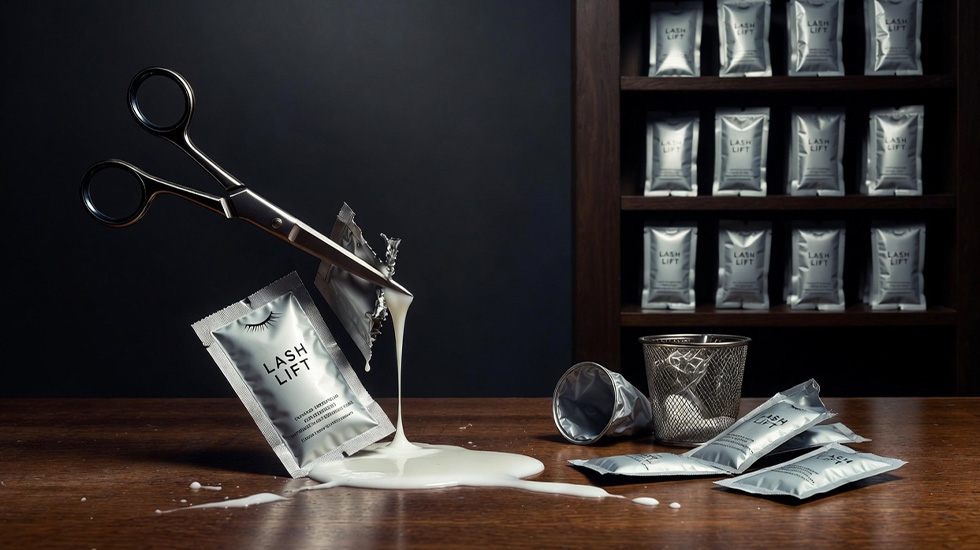
Before diving into molecular structures, we must address the sheer economic impact of product negligence. Professional sachets are densely packed with high-grade active ingredients. A standard 1.5ml sachet contains enough product to perform between 3 to 5 full lash lifts, depending on the client's hair density.
Consider the math: If your salon performs 20 lash lifts a week, and your artists are cutting sachets completely open—forcing them to throw away the remaining 70% of the product at the end of the shift—you are effectively purchasing three times the inventory required to operate. Over the course of twelve months, this translates to thousands of dirhams in pure, unadulterated financial bleed. By implementing zero-waste chemical protocols, you instantly triple the ROI on every single box of lifting product purchased.
The Chemistry of Oxidation: What Happens When a Sachet is Opened?
To preserve your products, you must understand what destroys them. The chemical reactions that power a lash lift are highly volatile. They are designed to react aggressively the moment they are exposed to the environment, which is why premium brands package them in airtight, single-use, foil-lined sachets rather than large, open jars.
Lotion 1 (Thioglycolate) & Oxygen Degradation
Step 1 lifting lotions rely on active reducing agents, primarily Thioglycolic Acid or Ethanolamine Thioglycolate. These compounds carry extra hydrogen atoms, which they donate to the hair's keratin structure to break the rigid disulfide bonds.
The Oxidation Threat: When you open a sachet, atmospheric oxygen ($O_2$) rushes inside. The oxygen immediately begins stealing those crucial hydrogen atoms from the thioglycolate before it ever touches the client's hair. This process is called oxidation. Once oxidized, the lotion completely loses its ability to break hair bonds. In harsh, high-humidity climates where the air is heavy with moisture, this oxidative breakdown occurs even faster, rendering an open, exposed sachet completely useless in less than 24 hours.
Lotion 2 (Hydrogen Peroxide/Bromate) & Light Sensitivity
Step 2 setting lotions (Neutralizers) act as the opposite force. They contain oxidizing agents like Hydrogen Peroxide ($H_2O_2$) or Sodium Bromate, which introduce oxygen back into the hair to lock the newly formed curl in place.
The Photochemical Threat: Hydrogen Peroxide is notoriously unstable when exposed to heat and ultraviolet (UV) light. If a Step 2 sachet is left open under bright salon ring lights or near a sunny window, the UV radiation breaks the molecular bonds of the hydrogen peroxide, rapidly converting it into plain water ($H_2O$) and oxygen gas ($O_2$). If you apply this degraded, watery solution to a client's lashes, the lift will not set, and the curl will drop entirely within hours.
The Pinhole Extraction Method: The Clinical Standard for Dispensing
The archaic method of using scissors to snip off the entire corner of a sachet must be abandoned immediately. Slicing off the corner creates a massive 5mm to 10mm breach, allowing oxygen to flood the interior chamber.
To maintain 100% clinical potency across multiple clients over several weeks, you must adopt the Pinhole Extraction Method when working with elite systems like the MyLamination 3-Step Sachet Kit:
- Step 1 (Sanitization): Push all the liquid lotion down to the bottom of the sachet. Wipe the top flat edge of the foil packet with an alcohol wipe to ensure the exterior is sterile.
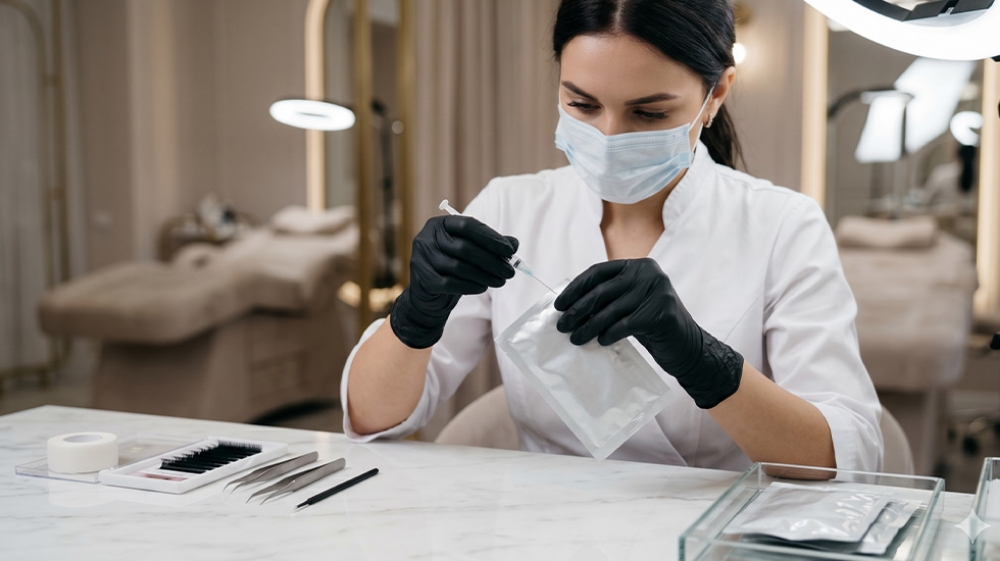
- Step 2 (The Puncture): Take a sterile, fine-point needle or a safety pin and pierce a single, microscopic hole right in the center of the top seal.
- Step 3 (Extraction): Gently squeeze the body of the sachet to force a micro-droplet of lotion out through the pinhole directly onto your clean mixing palette or micro-brush.
- Step 4 (The Vacuum): Once you have dispensed the required amount, stop squeezing. The microscopic size of the hole, combined with the thick viscosity of the lotion, creates an airtight capillary seal, preventing oxygen from rushing back inside the packet.
Environmental Storage Protocols: Temperature, Light, and Humidity Control
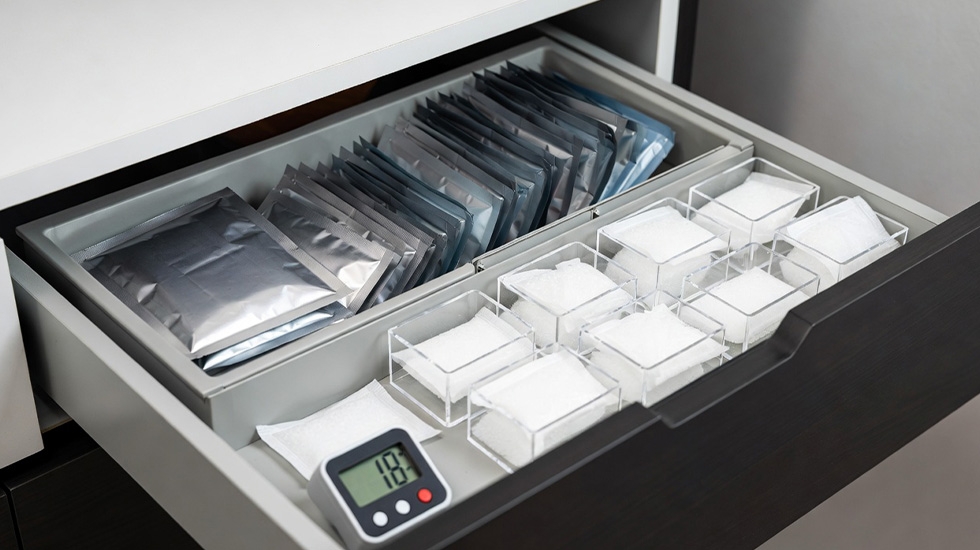
Once you have extracted your product via the pinhole method, where you store the sachet overnight dictates its remaining shelf life. Environmental fluctuations are the silent killers of salon chemicals.
Temperature Control: Sachets must be stored in a cool, dark, and consistently temperature-controlled environment, ideally between 15°C and 22°C (59°F to 72°F). Rapid fluctuations in salon air conditioning systems—especially turning the AC off completely overnight in hot, Middle Eastern climates—will cause the chemicals inside the foil to sweat, separate, and thermally degrade.
Humidity and Light: Keep all open sachets away from direct sunlight, ring lights, and sterilizer UV lamps. Furthermore, never store open sachets in a bathroom or near a sink where ambient humidity is high. Moisture in the air acts as a catalyst for premature chemical reactions.
Shielding the Breach: Medical Tape and Micro-Sealing Protocols
Folding the top of a sachet over and securing it with a standard metal paperclip is a dangerous, unhygienic practice. Paperclips provide uneven pressure, leaving microscopic gaps where air and humidity effortlessly infiltrate the foil lining. Furthermore, metal paperclips can rust in high-humidity salon environments, introducing iron oxide contamination near your chemical opening.
To properly execute a zero-oxygen seal, you must use non-porous medical barrier tools. After dispensing via the pinhole, wipe the exit point clean with a dry lint-free wipe. Next, cut a small square of high-adhesion, non-woven medical eyelid tape or isolation tape and press it firmly over the pinhole. This creates a highly secure, airtight, and hygienic seal. Place the taped sachet inside a small, airtight Tupperware container or a sealed ziplock bag, squeezing all the air out before locking it in your dark workstation drawer.
Spotting Degraded Lotions: When to Throw a Sachet Away
Even with perfect storage protocols, open chemicals have a finite expiration window. Applying degraded lotions will result in severely under-processed, straight lashes. Professional artists must rely on visual and olfactory (smell) cues to diagnose chemical death before touching a client's eyes.
- Color Shift (Visual Cue): Fresh Step 1 thioglycolate lotion is pure, opaque white or very light pastel (depending on the brand). If you squeeze the sachet and the lotion dispenses with a yellow, mustard, or brownish tint, it is completely oxidized. Throw it away immediately.
- Viscosity Separation (Visual Cue): If you squeeze the sachet and a watery, clear fluid shoots out followed by a chunky white paste, the emulsion has separated due to thermal degradation (heat exposure). It is unsafe for use.
- The Odor Test (Olfactory Cue): Step 1 has a distinct, clinical sulfur smell. If that smell becomes overwhelmingly pungent, sharp, or conversely, if the smell completely vanishes and smells like nothing, the chemical balance has destabilized. Step 2 (Neutralizer) should have almost no scent; if it smells sour, it has expired.
Sachet Shelf-Life Matrix: Unopened vs. Opened Potency Windows
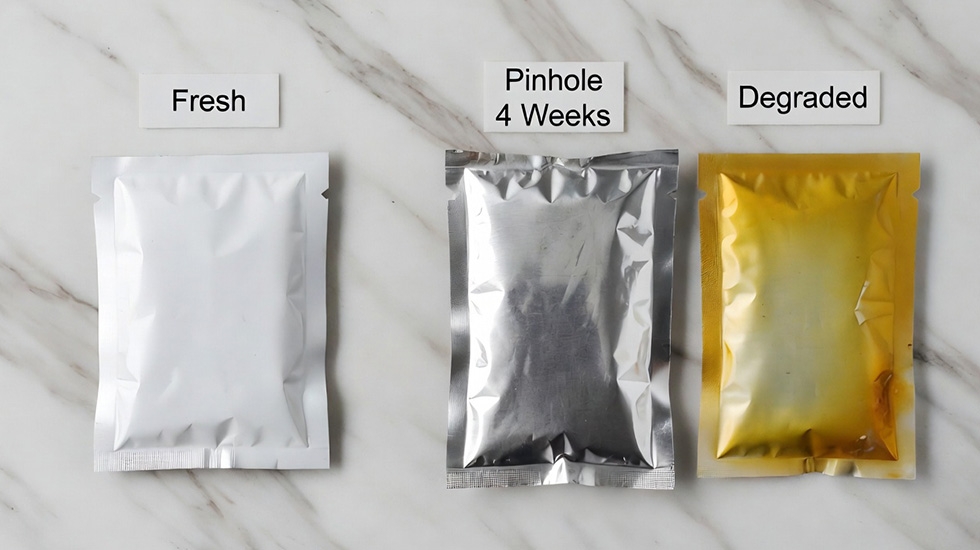
To eliminate guesswork, utilize this standard clinical timeframe matrix for premium foil sachets stored under optimal salon conditions (cool, dark, airtight):
| Product Phase | Unopened Shelf Life (From Manufacturing) | Opened Shelf Life (Cut w/ Scissors) | Opened Shelf Life (Pinhole & Tape Method) |
|---|---|---|---|
| Step 1 (Lifting Lotion) | 12 to 24 Months | Maximum 24 Hours | 4 to 6 Weeks |
| Step 2 (Neutralizer) | 12 to 24 Months | 48 Hours | 6 to 8 Weeks |
| Step 3 (Keratin/Vitamin) | 12 to 24 Months | 7 Days | 8+ Weeks |
Frequently Asked Questions (FAQ)
Can I store my open lash lift sachets inside the salon refrigerator?
No. While refrigeration slows down chemical degradation in many products, it is highly detrimental to lash lift sachets. The interior of a refrigerator is incredibly humid. Furthermore, the extreme cold causes the active ingredients inside the thioglycolate emulsion to crystallize and separate from the water base. Once taken out of the fridge, the rapid temperature shift causes heavy condensation inside the foil, completely ruining the chemical formulation. Always store at a stable room temperature.
Can I mix a little bit of a fresh sachet with an older, opened sachet to save product?
Absolutely never do this. By mixing a fresh batch of highly potent thioglycolate with an older, partially oxidized batch, you are instantly contaminating the new product. The oxidized molecules will act as a catalyst, rapidly breaking down the fresh hydrogen atoms. The result will be a wildly unpredictable pH level that can either severely burn the client's hair or fail to lift entirely.
Why did my Step 1 sachet balloon up and look puffy?
If a sealed or taped sachet puffs up like a balloon, it means the product has undergone a spontaneous chemical reaction, releasing internal gases. This is almost always caused by severe thermal shock—such as leaving the product in a hot delivery truck, near a heating vent, or under direct sunlight. The internal gas pressure signifies that the product is clinically dead and unsafe for any client service.
Conclusion: Maximizing ROI Through Chemical Respect
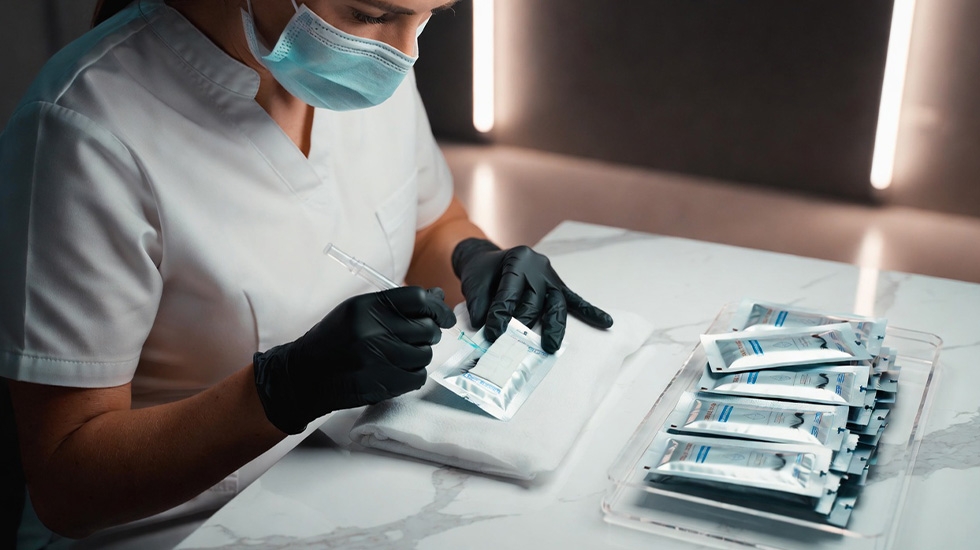
Operating a highly profitable, elite lash bar requires more than just artistic talent; it demands a rigorous, scientific approach to inventory management. By abandoning destructive habits like scissor-cutting and embracing the zero-oxygen pinhole method, you protect the structural integrity of your chemicals and ensure every single lash lift yields a flawless, predictable result.
Stop pouring your profit margins into the trash bin. Elevate your clinic's operational standards by adopting airtight storage protocols and utilizing high-yield, stable chemical systems. Explore the industry’s most reliable, premium lamination sachets and medical-grade sealing accessories directly through Winlash, and transform your salon's efficiency and profitability today.