
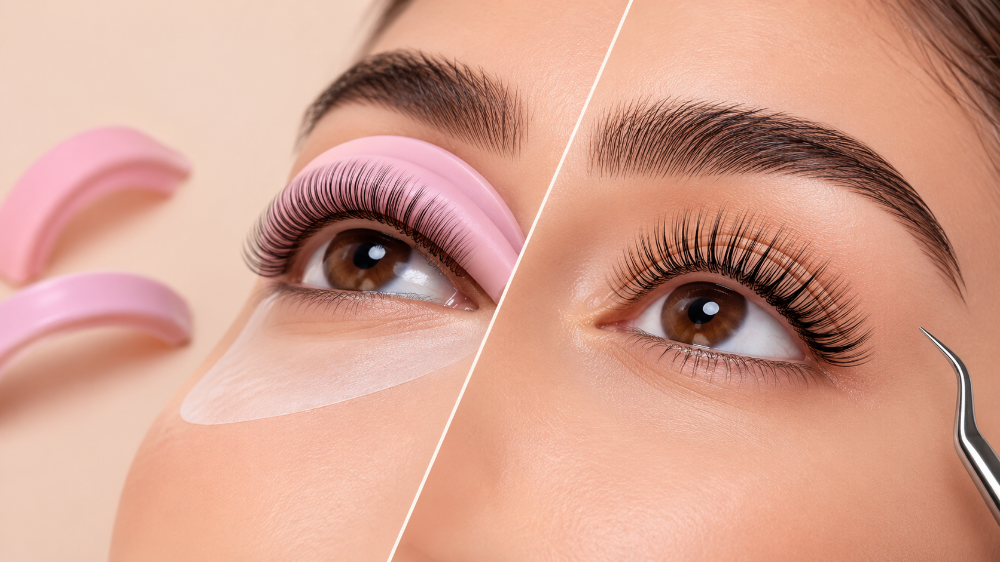
This guide explains what an eyelash perm changes, why the words perm and lift overlap, how rods, rollers and silicone shields influence curl direction, and what to check in a professional kit. It also covers realistic results, aftercare and the eye-area risks that lash artists should take seriously.
- An eyelash perm curls the client's natural lashes; it does not add artificial length or density.
- “Eyelash perm” and “lash lift” are not consistently separated in salon terminology. The actual tool design and lash placement explain the result more accurately.
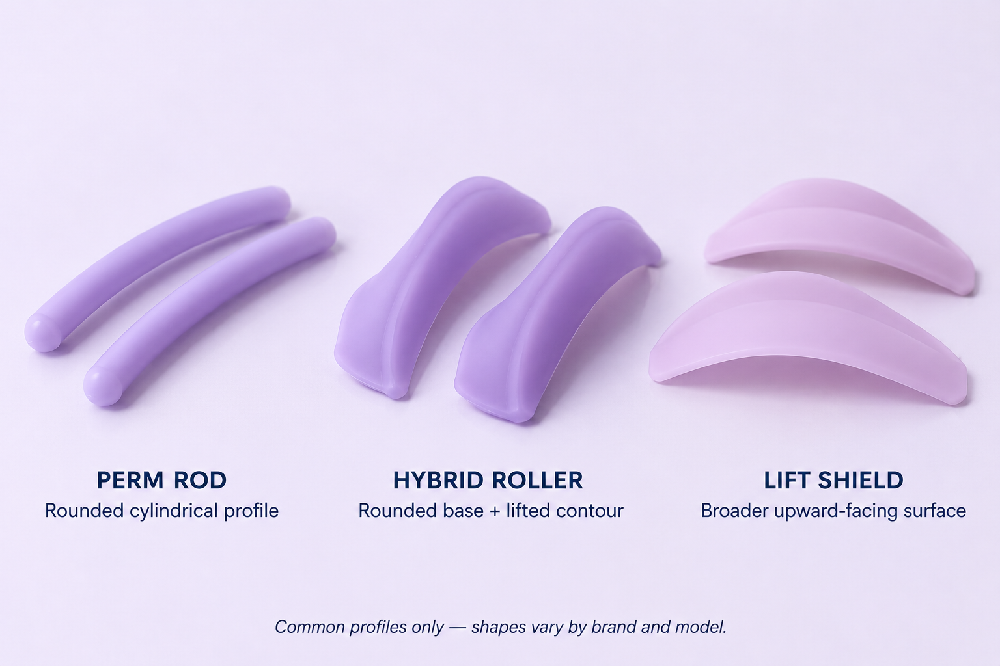
- Cylindrical rods commonly create a rounded curl, while many lifting shields are designed to elevate lashes from closer to the root—but there are hybrid designs and overlapping effects.
- Tool size, natural lash length, direction of growth and placement all matter. There is no one-size-fits-all rod or shield.
- Perming and lifting solutions are used close to the eye. Product-specific instructions, hygiene and appropriate professional training are essential.
Quick Access to This Article
What Does an Eyelash Perm Do to Natural Lashes?
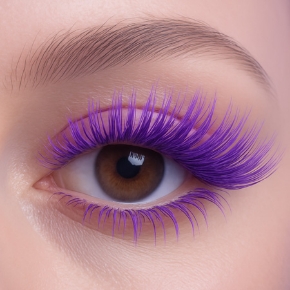
An eyelash perm changes the shape of existing lashes so they hold a curved or lifted appearance for a period of time. Unlike extensions, the treatment works on the client's own lash fibres. It can make straight or downward-growing lashes look more defined and can make the eyes appear more open, depending on the curl design and how the lashes are positioned during the service.
The result is a change in shape and direction, not a biological increase in lash length, thickness or growth. If a client wants added density or visibly longer fibres, a perm alone cannot provide that; it only changes how the natural lashes are presented.
How Perming and Setting Solutions Reshape the Lash
Most professional systems use a shaping stage followed by a setting or neutralising stage. The first lotion makes the lash more responsive to reshaping; the second helps stabilise the new form. The chemistry differs between brands and formulations, so a lash artist should not transfer processing times or mixing assumptions from one system to another.
A peer-reviewed review of chemical bonds and hair behaviour describes how cosmetic treatments interact with the structure of keratin fibres. This is useful background for understanding why processing and timing matter, but it is not a lash-perm protocol and should never replace the instructions or safety data for a particular product.
What a Perm Can Change – and What It Cannot
| What the Treatment Can Change | What It Does Not Do |
|---|---|
| The visible curve or lift direction of natural lashes | It does not add synthetic fibres or extension volume |
| How much of the natural lash is visible above the lash line | It does not make the natural lash biologically longer |
| The overall impression of eye openness and lash definition | It does not permanently change the natural growth pattern |
Eyelash Perm vs Lash Lift: Are They the Same Treatment?
There is no single naming convention used by every salon, supplier or training system. Some businesses use eyelash perm and lash lift as two names for a similar semi-permanent curling service. Others use perm for a more rounded curl created around a rod and lift for a more upward, root-focused result created on a shield.
For that reason, the clearest comparison is not simply “perm versus lift”. Ask which support is used, how the lashes are laid onto it, where the curve begins, and what finish the design is intended to create. WinLash's professional lash lift guide covers the modern lifting workflow; this article focuses on the terminology and tool differences that often sit behind the word perm.
Why Salons Use Both Terms
The word perm comes from the idea of reshaping hair so it keeps a new form for a limited period. Lash lift is now widely used for services that raise and curl natural lashes. In product listings and salon menus, however, the terms may overlap. A kit may even be labelled as both a lash lift kit and an eyelash perm kit.
Traditional Rod-Based Curling vs Root-Focused Lifting
| Common Setup | Typical Positioning | Intended Visual Effect | Important Qualification |
|---|---|---|---|
| Cylindrical perm rod | Lashes are wrapped or placed around a rounded support | A more rounded or pronounced curl | Rod diameter and placement change the result |
| Curved silicone roller | Lashes are arranged along a curved silicone surface | Can create a range of curl shapes | Some rollers bridge traditional curling and lifting designs |
| Lift shield or pad | Lashes are aligned over a shield to guide upward positioning | A more root-directed, open-eye lift | Shield profile and lash placement still determine the finish |
How Rods, Rollers and Silicone Shields Affect Curl Results
The support is the surface on which the natural lashes are arranged while the shaping and setting products work. Its curve, height, width and fit against the eyelid influence the path the lashes take. It is more accurate to think of tools as a range of designs than as two rigid categories.
How Cylindrical Rods Create a Rounded Curl
A cylindrical rod gives the lashes a rounded surface to follow. In general, a smaller-diameter support can create a tighter-looking curve than a larger one, but the final result also depends on the client's natural lash length, the position of the lash on the rod and the system instructions. A rod that is too small for a long lash may produce an overly tight or crimped-looking finish; a support that is too large may not create the intended visible curl.
How Silicone Pads and Shields Position the Lashes
Silicone shields provide a shaped surface against which the lashes can be aligned. Some are designed for a strong lift from the base; others have a more rounded or dramatic profile. Even within one product range, pad shape and size can make a visible difference. For example, WinLash lists its My Lamination pad set in five sizes—S, M, XM, L and XL—and offers Butterfly and Tube styles described by the supplier as different curl effects.
Another option is a hybrid profile. WinLash's Hybrid Rollers are offered in seven sizes from XXS to XXL, giving technicians a wider size range when matching the support to different natural lash lengths and eyelid contours.
For technicians comparing pad profiles and sizes, the My Lamination Silicone Lash Lift Pads product page lists the five-size set and its Butterfly and Tube options. Treat the brand's effect descriptions as product-specific guidance, not a universal rule for every shield on the market.
Why Tool Size and Lash Placement Matter
Choosing a rod or shield starts with the natural lashes—not with the most dramatic result in a reference photo. Consider:
- Natural lash length: enough surface must be available to position the lash without forcing the tip into an unsuitable curve.
- Growth direction: straight, downward-growing and naturally curved lashes may need different positioning choices.
- Eyelid contour: a support must sit securely and comfortably against the client's lid without pinching or leaving gaps.
- Desired finish: a rounded curl and an upward, elongated lift are different visual goals.
- Lash condition: fragile, dry or previously over-processed lashes require careful assessment; another chemical service may not be appropriate.
What Happens During a Professional Eyelash Perm?
Exact steps, product names and processing times vary by brand. The outline below explains the usual stages of a professional service; it is not a substitute for the instructions supplied with a particular perm or lash-lift system.
Preparing and Positioning Natural Lashes
The technician checks the condition of the natural lashes and the skin around the eyes, removes makeup and selects the support. Lashes should be separated and arranged deliberately so that they do not cross, overlap or become attached in an unintended direction. Accurate placement is essential because the set follows the position in which the lashes are processed.
Applying the Perming and Setting Solutions
The shaping product and the setting or neutralising product are applied in the order and for the duration specified by the manufacturer. Do not copy a timing chart from a different brand, assume that all formulas use the same active ingredients, or extend processing because the curl appears too soft. Over-processing can compromise the lash fibre and irritate the delicate skin around the eye.
Removing Residue and Conditioning the Lashes
At the end of the service, the technician removes products according to the system instructions, releases the lashes from the support and checks the result. Some kits include a final conditioning or nourishing step; others specify a different finish. Do not add an unlisted product simply because it appears in another brand's protocol.
What Is Included in an Eyelash Perm Kit?
A professional eyelash perm kit is a system, not just a bottle of perm lotion. Its components should work together and be supplied with clear directions for use. Exact contents vary, so always check the individual product listing and package before treatment.
| Component | Typical Role | What to Check |
|---|---|---|
| Perming or lifting lotion | Softens or reshapes the lash so it can take the selected form | Intended use, ingredients, directions and processing limits |
| Setting or neutralising lotion | Helps stabilise the new shape after the shaping stage | Correct pairing with the first product and required sequence |
| Rod, roller or silicone shield | Provides the surface used to position the lashes | Size range, profile, fit and compatibility with the system |
| Adhesive or fixing product | Secures the support or helps hold lashes in position, if required by the system | Whether the specific system requires it and how it is removed |
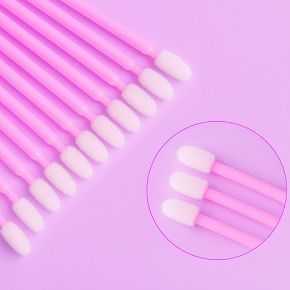
| Combs, Y-brushes and applicators | Help separate, align and apply products precisely | Cleanability, single-use requirements and suitability for eye-area work |
| Conditioning or finishing product | Provides the final step where included in the protocol | Whether it is part of the manufacturer's specified system |
Perming and Fixation Lotions
These are the core chemical stages in many systems. They must be used as a matched sequence where the manufacturer specifies one. Check the product name, ingredient declaration, intended treatment, batch or lot information, expiry details and complete instructions before opening the kit.
Adhesive, Rods or Silicone Pads, and Application Tools
Some systems use an adhesive to secure the silicone support or arrange lashes; others use a different placement method. The tray should include the supports and application tools required by that exact protocol. If a kit is missing a key component or the instructions do not explain which components are compatible, do not improvise with an unrelated product.
What Lash Artists Should Check Before Using a Kit
- It is specifically labelled for professional eyelash lifting or perming—not simply for scalp hair.
- The full instructions, warnings and ingredient information are available and readable.
- The kit is within its stated expiry period and the packaging is intact.
- The lotions, adhesive and supports are designed to be used together.
- The kit includes the sizes and shapes needed for the clients you typically treat.
- Reusable tools can be cleaned and disinfected according to their material and manufacturer guidance; disposable items are not reused.
Do not describe a lash kit as “FDA-approved” unless the product has a specific, verifiable regulatory status that justifies that exact claim. In the United States, the FDA explains that cosmetic products and ingredients generally do not receive pre-market approval in the same way as medicines, while certain colour additives are subject to specific rules. Regulatory requirements also differ by market, including the UAE.
How Long Does an Eyelash Perm Last?
.png "Before and After Traditional Eyelash Perm Results")
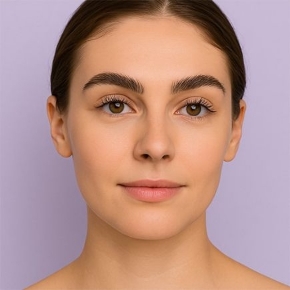
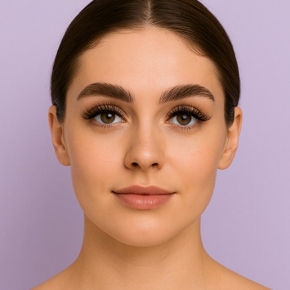
An eyelash perm is temporary. The treated part of each lash keeps its shape until that lash naturally sheds and is replaced, so the overall appearance gradually changes as the lash line renews. Medically reviewed guidance from All About Vision describes a typical result of around six to eight weeks. Treat this as a general estimate, not a guarantee for every client or formula: the treated lashes shed at different times and new growth appears with its natural direction.
How the Natural Lash Growth Cycle Changes the Results
Natural lashes are not all at the same stage of growth at the time of treatment. Some remain in place longer while others shed and are replaced sooner. As new lashes grow in with their natural direction, the overall line can look less uniform. This is why the result does not disappear on one fixed day and why clients may notice gradual changes rather than a sudden end to the curl.
What Can Affect Curl Longevity
- Natural lash turnover: treated lashes shed at different times as part of the normal cycle.
- Original lash condition: fragile or previously processed lashes may not respond like healthy lashes.
- Tool selection and placement: an unsuitable support or uneven positioning can produce an inconsistent finish.
- Formula and protocol: the product system, processing limits and correct sequence matter.
- Aftercare: rubbing, pulling or ignoring the manufacturer's care advice may affect the appearance and condition of the lashes.
Rather than promising every client the same number of weeks, explain that the result varies and that repeat treatment should be based on the condition of the natural lashes and the exact product manufacturer's recommended interval. Avoid reprocessing lashes simply because some new growth has appeared.
Is Eyelash Perming Damaging?
.png "Is Eyelash Perming Damaging? Potential Risks of Lash Lifting")
An eyelash perm is not automatically damaging, but it is not risk-free. The treatment places chemical products close to the eye and on delicate lash fibres. Incorrect placement, unsuitable products, poor hygiene, excessive processing or an individual sensitivity can lead to irritation, allergic contact dermatitis or damage to the lash fibre.
A TFOS review of cosmetics and ocular-surface health discusses the potential for lash-lifting chemicals, including perming and neutralising agents, to affect the ocular surface and surrounding tissue. A 2026 case report in the British Journal of Dermatology also describes allergic contact dermatitis following a lash lift and tint, with reactions linked to several possible exposures. A case report demonstrates that a reaction can occur; it does not tell us how frequently it happens.
The FDA's eye cosmetic safety guidance is relevant to hygiene and products used around the eyes. It specifically warns about the risks associated with permanent eyelash and eyebrow dyes; that warning is about tinting and dyeing, not a blanket assessment or approval of every lash-perm formula.
Risks of Irritation, Allergic Reactions and Over-Processing
- Irritation: a product may irritate the eyelid or ocular surface if it contacts an area it should not reach.
- Allergic contact dermatitis: sensitivity can relate to an ingredient in a lifting lotion, adhesive, fixing product or optional tint. A client may react even if they have had a previous treatment without a reaction.
- Over-processing: exceeding the product's directions or repeating chemical services too soon can leave lashes dry, weak or irregular.
- Contamination: shared or inadequately cleaned tools and contaminated products can add infection risk around the eye.
For more technical context, read the peer-reviewed TFOS Lifestyle review on the impact of cosmetics on the ocular surface. A separate 2026 British Journal of Dermatology case report on lash-lift dermatitis describes a specific allergic reaction after a combined lift-and-tint service; it should be read as a documented case, not a population-level risk estimate.
How Professional Assessment Helps Reduce Avoidable Risks
Before treatment, ask about previous reactions to lash or brow products, adhesives, tints and hair-perming ingredients. Check the manufacturer's contraindications and patch-test policy, and postpone the service if the client has an active eye infection, inflamed eyelids or visibly compromised skin around the eyes. Follow the exact product instructions; never substitute a scalp hair perm product or an unapproved tint near the eye.
If a client develops significant pain, persistent redness, swelling, marked watering, light sensitivity or blurred vision during or after a service, stop the treatment and advise prompt medical assessment. Do not attempt to cover up an eye reaction with another cosmetic product.
Aftercare During the First 24 Hours
Aftercare directions differ between systems, so the manufacturer's instructions take priority over a universal online rule. For the immediate period after treatment:
- Do not rub, pull or repeatedly brush the lashes while the treatment is settling.
- Follow the kit's exact guidance on water, steam, heat, mascara and other eye products; some systems specify restrictions during the first 24 hours.
- Use only cleansers and conditioning products that are compatible with the treatment and intended for the eye area.
- Do not try to correct an uneven result by applying another perming lotion at home.
- Contact the technician or a healthcare professional if irritation or an unexpected reaction develops.
Frequently Asked Questions About Eyelash Perms
What does an eyelash perm do?
It temporarily curls or lifts the client's natural lashes using a shaping and setting system. It changes the visible direction of the lashes but does not add extensions or make the natural fibres grow longer.
How long do eyelash perms last?
Many service descriptions quote roughly six to eight weeks, but the result varies with natural lash shedding, the client's lash condition and the product protocol. Treat that range as an estimate rather than a guaranteed duration.
What is better, a lash lift or a lash perm?
Neither name is automatically better. Some salons use the terms for the same service. When they distinguish them, a rounded rod-based curl may suit a more pronounced curl, while a shield-based setup may be chosen for a more root-directed lift. The actual tool shape and placement matter more than the label.
Can an eyelash perm damage natural lashes?
It can cause dryness, over-processing or breakage if the wrong system is used, processing limits are ignored or treatments are repeated without assessing lash condition. Irritation and allergic reactions are also possible because products are used close to the eye.
Can you do an eyelash perm at home?
Home kits are marketed online, but applying chemical lotions close to the eye requires careful placement, hygiene and strict product-specific timing. A trained professional is the safer choice. Do not confuse lash-perm lotions with eyelash dyes: the FDA specifically warns against at-home eyelash and eyebrow dyeing.
Does every eyelash perm kit include rods and silicone shields?
No. Kit contents vary. Some include rods, some include silicone pads or shields, and some offer only the solutions or selected accessories. Check the product listing and instructions to confirm which supports and applicators are included.
Conclusion: Choose the Tool for the Curl, Not Just the Name
Eyelash perm and lash lift are closely related terms, but the tool profile and lash placement explain the final curl more clearly than the service name. A rounded rod, a hybrid roller and a silicone shield can guide natural lashes in different ways—and designs within each category can produce different finishes.
For lash artists, the practical decision is to assess natural lash length and condition, choose a support that matches the desired result, and follow the exact instructions for the selected product system. That approach gives clients a more considered result while keeping safety and lash integrity at the centre of the service.
Explore the professional tools and supplies available from WinLash when planning your lash-lifting setup.
Shop WinLashProfessional education only. Always follow the current manufacturer instructions, warnings and training for the exact lash-lifting system used. This article does not replace product-specific directions, professional training or local regulatory requirements.