
Table of Contents
- The Chemistry of Cyanoacrylate Adhesives
- What is a Lash Primer? (The Pre-Treatment Catalyst)
- What is a Lash Bonder? (The Post-Treatment Lock)
- Side-by-Side Retention Matrix
- Environmental Factors: Temperature and Lash Room Humidity
- How to Integrate Both into Your Workflow
- The Cost of Misuse: Shock Curing and Brittle Adhesive Bonds
- Frequently Asked Questions
In the professional eyelash styling industry, maximizing retention requires a precise understanding of your chemical application timeline. When analyzing your back-bar protocols to prevent premature shedding, navigating the exact chemistry of Lash Primer vs. Lash Bonder is critical to your studio's success. While exploring professional eyelash extension glue and liquids, many lash artists question whether these formulas are interchangeable or redundant. To optimize cyanoacrylate polymerization and safeguard your sets against varying environmental climates, let's dive deep into the science of lash retention to understand why these two distinct liquids operate on completely opposite ends of your styling workflow.
The Chemistry of Cyanoacrylate Adhesives
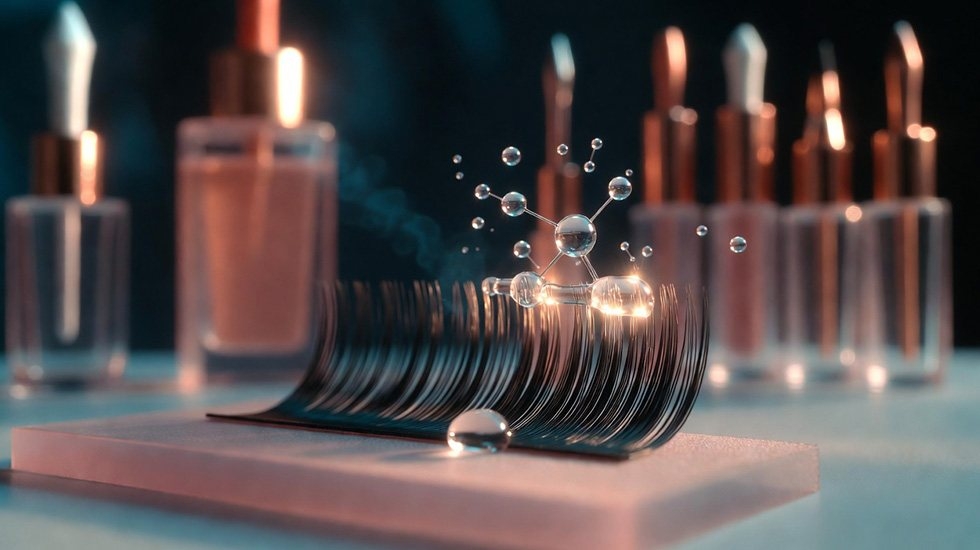
To understand retention enhancers, you must first understand your glue. Modern professional lash adhesives rely almost exclusively on cyanoacrylate. Unlike traditional glues that dry via evaporation, cyanoacrylate cures through a chemical reaction called anionic polymerization. This reaction is triggered instantly by moisture (specifically hydroxyl ions) present in the air and on the surface of the natural lash.
If the natural lash is too dry, too oily, or highly acidic, the polymerization process stalls, resulting in poor attachment. Conversely, if sudden moisture hits the curing glue externally, it causes "shock curing," turning the adhesive brittle, white, and highly prone to premature shedding. This is exactly where primers and bonders step in to control the environment.
What is a Lash Primer? (The Pre-Treatment Catalyst)
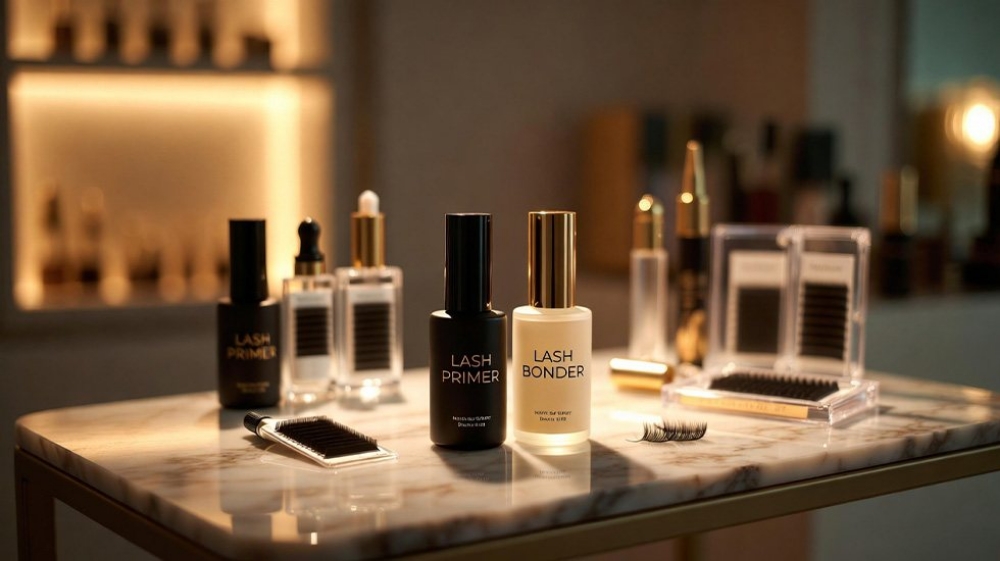
A professional lash primer is a precision-engineered pre-treatment liquid applied to the natural lashes immediately following the initial deep cleanse (lash shampoo) and prior to placing your first extension. From a biochemical standpoint, it serves as the ultimate surface-conditioning agent that bridges the gap between organic hair keratin and synthetic cyanoacrylate.
The Science of Surface Prep: Human eyelashes are naturally coated in sebum (lipids), metabolic proteins, and residual cosmetic elements. This film acts as a physical barrier. If a fast-setting adhesive is applied directly over an unprimed, oily hair shaft, the cyanoacrylate bonds to the volatile oil layer rather than the actual hair structure, leading to catastrophic retention failure within 48 to 72 hours.
A high-performance primer dissolves these stubborn lipid matrices cleanly using optimized, cosmetic-grade solvent carriers while simultaneously modulating the hair's natural pH level. Healthy human hair naturally sits at a slightly acidic pH of roughly 4.5 to 5.5. Primers elevate this local environment toward a mild alkaline state (typically between 7.0 and 8.0).
When exposed to this slight alkalinity, the microscopic keratin cuticles—the protective, shingle-like outer layers of the hair shaft—gently swell and lift outward. This micro-scale texture optimization dramatically multiplies the physical surface area of the natural lash. When a classic extension or volume fan is placed, the liquid cyanoacrylate flows into these microscopic gaps instantly, establishing an unshakeable mechanical lock. This eliminates extension sliding, grounds the attachment base, and significantly cuts down your isolation-to-placement transition time.
What is a Lash Bonder? (The Post-Treatment Lock)
Conversely, a premium lash bonder functions on the polar opposite end of your appointment timeline. It is a highly specialized post-treatment accelerator designed to interact directly with the active, curing adhesive points once your styling map is 100% complete.
To grasp the engineering genius behind a bonder, one must look at how traditional cyanoacrylate cures naturally. Without a post-treatment curing agent, lash glues rely entirely on ambient atmospheric humidity to slowly polymerize over a 24 to 48-hour window. This standard atmospheric curing operates strictly from the outside-in, forming a premature outer crust that traps volatile, unpolymerized monomers underneath. As these trapped molecules slowly break down and cure, they continuously off-gas, releasing heavy chemical vapors that cause burning sensations, eye redness, and localized chemical sensitivity for the client.
When a professional bonder is precisely micro-dosed onto the active glue joins, it completely rewrites this volatile timeline by triggering a series of immediate structural upgrades:
- Instant Inside-Out Polymerization: Instead of waiting days for atmospheric moisture to settle, the bonder introduces immediate chemical cross-linking agents that force polymerization from the core outward, solidifying the adhesive mesh in under 3 minutes.
- Immediate Vapor Capture: By locking the cyanoacrylate chains rapidly, it permanently traps unpolymerized monomers beneath the surface, completely neutralizing chemical off-gassing and eliminating post-appointment stinging or redness.
- Elastomeric Matrix Shock Absorption: Traditional slow curing leaves glue joints rigid, glassy, and brittle. A bonder infuses calculated elasticity into the bond site, creating a resilient, flexible matrix that safely bends under daily brushing or sleeping friction without snapping off.
- Absolute Elimination of Downtime: Because the chemical bond is fully stabilized instantly, it completely abolishes the outdated "don't wet your eyes for 24 hours" restriction. Your clients are free to shower, swim, sweat, or steam immediately post-appointment with zero risk of shock curing.
Lash Primer vs. Lash Bonder: Side-by-Side Retention Matrix
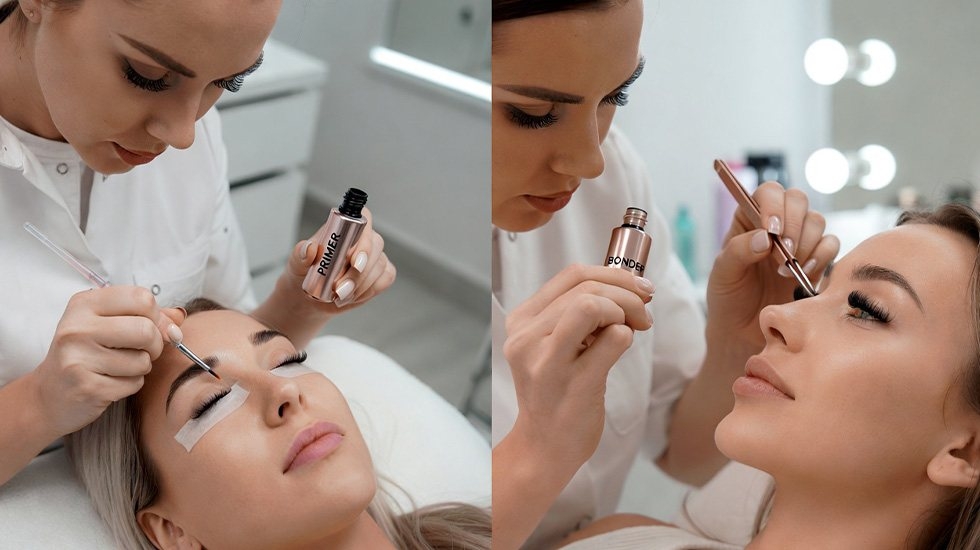
To keep your back-bar protocol clear and optimize your client care strategy, evaluating the structural layout of Lash Primer vs. Lash Bonder across key performance metrics is essential. Here is how these two liquid powerhouses compare when addressing specific adhesion, retention, and chemical curing variables during application:
| Feature | Lash Primer | Lash Bonder |
|---|---|---|
| Application Timing | Before applying extensions (Prep) | 2-3 minutes after the final extension (Finish) |
| Target Surface | Natural lash cuticle | Adhesive bonding points |
| Chemical Goal | Removes lipids, adjusts pH to alkaline | Accelerates inside-out polymerization |
| Client Benefit | Prevents base extensions from slipping | Zero fumes, instant water exposure allowed |
Environmental Factors: Temperature and Lash Room Humidity
Your workspace environment heavily dictates how extension liquids behave. Cyanoacrylate is highly hygroscopic—it draws moisture from the surrounding air to cure. Therefore, fluctuations in your lash room humidity and temperature can completely alter your adhesive’s curing speed, making primers and bonders your environmental insurance policies.
In Low Humidity Conditions (Below 40% RH): The air lacks the moisture needed to kickstart anionic polymerization. The glue stays wet for too long, causing extensions to lean, slip, or create "stickies." Utilizing a pH-balanced primer in this scenario is vital; it forces the natural lash cuticle to act as a localized alkaline accelerator, speeding up the magnetic attraction between the extension base and the hair shaft.
In High Humidity Conditions (Above 65% RH): The glue cures too quickly, often partially hardening before you can place the extension onto the natural lash. This causes a weak surface-only bond. To prevent this adhesive layer from degrading rapidly into brittle adhesive bonds, applying a post-treatment bonder seals the core structure instantly, protecting the premature bond from collapsing under heavy atmospheric moisture.
How to Integrate Both into Your Workflow
For master lash artists, it is not a matter of choosing one over the other; it is about combining them systematically to achieve unparalleled retention. Here is the professional step-by-step master method using high-performance components:
- Prep: Wash the lashes using an oil-free lash shampoo. Rinse thoroughly and pat dry.
- Prime: Apply a minimal amount of primer to a microfiber brush. Dampen, don't soak, and glide it across the natural lashes. Let it air dry completely.
- Isolate & Bond: Dip your lash extension into a premium, stable adhesive like our Eyelash Extension Black Glue (5ml) and place it accurately on the isolated natural lash.
- Lock: Once the full set is finished, wait 2 to 3 minutes. Take a clean microbrush, apply a tiny drop of bonder, wipe off the excess, and precisely dab the base of the extensions where the adhesive sits.
The Cost of Misuse: Shock Curing and Brittle Adhesive Bonds
While adding these liquids to your back-bar can transform your business, improper application protocols can yield catastrophic retention issues and chemical irritation for your clients.
An all-too-common industry error is over-priming lashes. Because primers contain controlled amounts of cosmetic-grade alcohol to strip oils, soaking the natural lashes can over-dehydrate the hair cortex. When the hair becomes hyper-dry, the adhesive cannot cure from the inside out; instead, it crystallizes on the surface, causing the extensions to pop off effortlessly during the post-appointment brush-out.
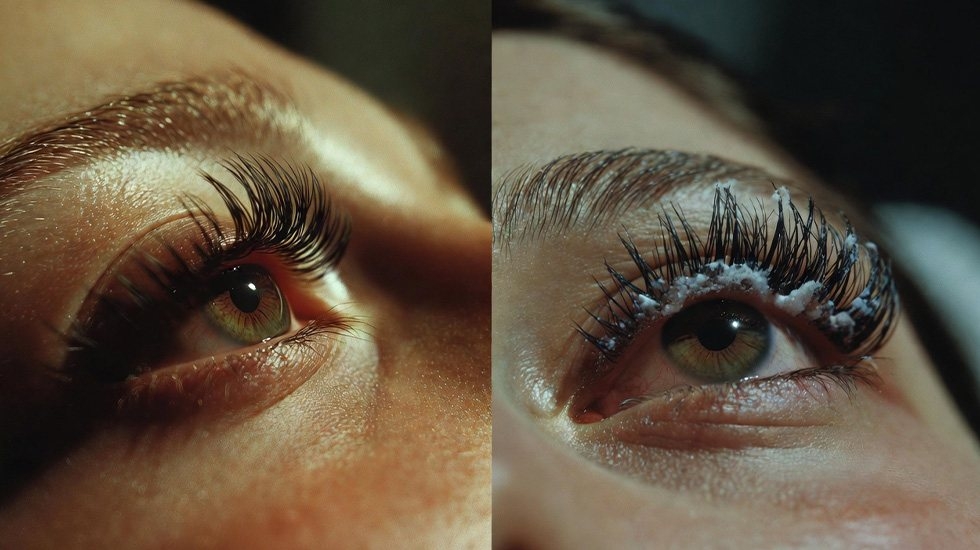
On the flip side, mismanaging your bonder can trigger immediate shock curing. If you apply a post-treatment bonder too quickly—before allowing the outer layers of cyanoacrylate to naturally settle for 2 to 3 minutes—the rapid chemical conversion turns the glue frosty white. This is known as bleaching or blooming. Not only does this ruin the aesthetic look of a clean black lash line, but it also creates a rough, scratchy texture that causes localized eyelid friction and premature shedding within days.
Frequently Asked Questions
Can I use a lash bonder instead of a primer?
No. They serve completely unique chemical roles. Primer prepares the raw, natural canvas for initial bonding by removing oils, while a bonder modifies the internal structural curing of the glue at the end of the treatment.
Does primer dry out the client's natural lashes too much?
Only if over-applied. If your client has extremely dry, brittle hair or a low moisture level, you can skip primer and use a saline primer or pre-treatment cleanser instead. For oily skin types, primer is mandatory.
Can I use a nano mister if I already applied a bonder?
You don't need to. A nano mister introduces external moisture to cure the top layer of glue slowly, whereas a bonder polymerizes the internal core instantly. Using both is redundant and can occasionally over-saturate the bond.
When comparing Lash Primer vs. Lash Bonder, do you need lash primer and bonder for every client?
Yes, because they serve opposite functions. In the breakdown of lash primer vs lash bonder, the primer is used at the start to strip oils and open cuticles, while the bonder is applied at the end to instantly cure the glue mesh.
So, do you need lash primer and bonder for every set? While not mandatory, using both together is the ultimate insurance for maximum retention, zero vapor irritation, and allowing clients to wet their lashes immediately.
Want to unlock industry-leading retention metrics for your salon or brand? Elevate your lash studio setup with authentic, premium supplies exclusively from WinLash.