

Table of Contents: Pregnancy Lash & Brow Safety
- The Science of Chemical Absorption: Skin vs. Lash Hair
- Lash Lifts vs. Brow Lamination vs. Lash Tinting
- Can Brow Lamination or Lash Lifts Cause Miscarriage?
- The Hormonal Effect: Why Your Lash Perm Might Drop
- Trimester-by-Trimester Safety Protocol
- Physical Risks: Lying Flat and Supine Hypotensive Syndrome
- Are Lash Lifts and Brow Laminations Safe While Breastfeeding?
- Pregnancy-Safe Alternatives & Nourishing Daily Care
- Frequently Asked Questions (FAQ)
- Final Medical Verdict: Making Empowered Beauty Choices
⚡ Direct Clinical Summary: Are Lash Lifts & Brow Laminations Safe?
- Lash Lifts (LVL): Low systemic risk after the first trimester because lifting lotions are applied strictly to the hair shaft without contacting the eyelid skin.
- Brow Lamination: Carries a higher risk of contact dermatitis and minimal dermal absorption due to continuous chemical application directly onto the skin.
- Lash & Brow Tinting: Generally considered safe if vegetable or semi-permanent dyes are used and skin contact is eliminated.
- Mandatory Precaution: A 48-hour patch test is essential due to hyper-reactive maternal immune responses. Always consult your obstetrician prior to treatment.
Pregnancy brings substantial physical changes, leading many expectant mothers to seek low-maintenance beauty routines like lash lifts and brow styling. However, concerns regarding fetal exposure to chemical perms, thioglycolates, and oxidizers require a grounded scientific perspective. Navigating salon procedures safely means understanding the pharmacology of professional lash and brow lift products, maternal physiological shifts, and clear trimester guidelines.
The Science of Chemical Absorption: Skin vs. Lash Hair
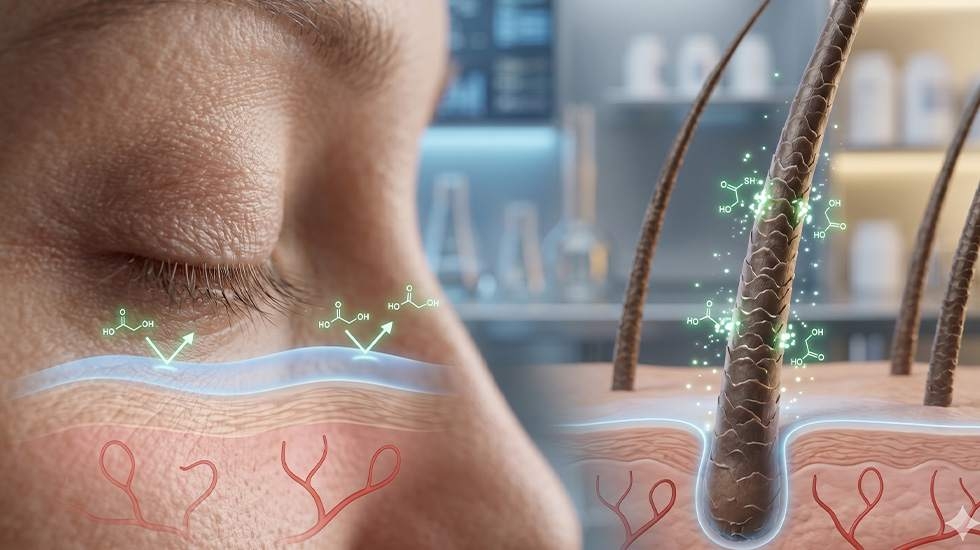
The core of evaluating maternal cosmetic safety lies in transdermal permeability. Lash lifting and brow perming utilize reducing agents—predominantly ammonium thioglycolate, cysteamine hydrochloride, or ethanolamine—to break the internal disulfide cystine bonds of the hair fiber. Once softened, a neutralizing solution (typically diluted hydrogen peroxide) rebuilds these bonds into an elevated curl.
Because hair fibers have no vascular supply, chemicals interacting exclusively with the mid-shaft of an eyelash cannot migrate into maternal blood vessels or cross the placental barrier. Risk emerges solely if low-grade formulations migrate into the ocular mucosa or directly onto epidermal tissue. For this reason, reputable salons utilize high-specification brow and lash lift materials engineered with viscous, non-dripping consistencies that remain immobilized on the shield.
Lash Lifts vs. Brow Lamination vs. Lash Tinting: What Are the Differences?
- Lash Lift (LVL / Keratin Perm): A contoured silicone rod shields the upper eyelid. Lashes are lifted upwards, and solutions are positioned 1 to 2 millimeters away from the lash root. At no point should solutions touch the skin, making systemic absorption negligible.
- Brow Lamination: Unlike lash procedures, brow restructuring requires brushing perming solutions thoroughly through brow hairs and pressing them directly against the brow bone skin. With maternal skin experiencing heightened vascularity and permeability, direct chemical contact poses an elevated risk of severe contact dermatitis.
- Lash & Brow Tinting: Semi-permanent tinting involves vegetable- or coal-tar-free dyes mixed with a low-volume (3%) developer. When performed by an experienced professional who does not press dye into the root waterline, tinting carries negligible risk.
To understand the broader spectrum of potential ocular irritations, explore our clinical overview of lash lift side effects and risks.
Can Brow Lamination or Lash Lifts Cause Miscarriage?
Miscarriage concerns often stem from historical confusion between modern localized cosmetic treatments and industrial-scale chemical toxicities. Teratogenic compounds require substantial systemic bloodstream saturation to reach intrauterine tissue. Neither thioglycolate nor cysteamine lotions applied in microscopic quantities (0.5 ml) to lash hair reach maternal systemic circulation. While first-trimester avoidance is advised as a standard precautionary measure during organ development, getting an accidental lash lift or brow lamination before knowing you are pregnant carries no documented clinical link to pregnancy termination.
The Hormonal Factor: Why Your Lash Lift Might Fail During Pregnancy
Pregnancy hormones significantly extend the anagen (growth) phase of hair while modifying sebum and lipid production along the follicle. For lash clients, this manifests as unpredictable cuticle resistance. Lash artists frequently report that pregnant clients experience:
- Premature Dropping: A lift that normally lasts 6 to 8 weeks may relax or flatten within 7 to 10 days.
- Refractory Resistance: The hair cuticle fails to soften, yielding no discernible curl after full processing time.
- Exaggerated Sensitivity: Sudden development of blepharitis or erythema from adhesives or silicones previously tolerated without issue.
Trimester-by-Trimester Safety Protocol for Expecting Mothers
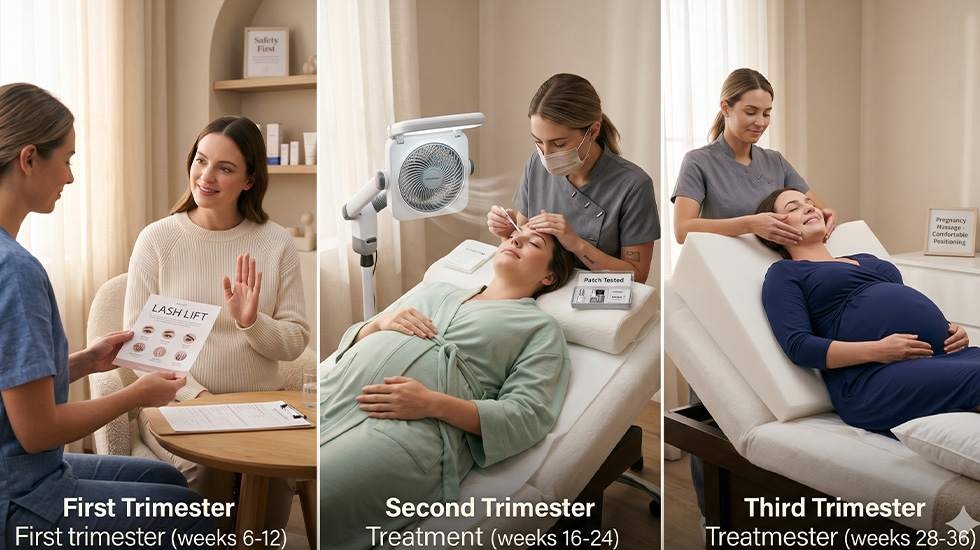
| Trimester | Safety Status | Primary Clinical Risk | Medical Recommendation |
|---|---|---|---|
| First Trimester (Weeks 1–12) | Strictly Avoid ⛔ | Active organogenesis; severe odor intolerance and morning sickness. | Postpone all elective chemical services. Opt for clean conditioning balms. |
| Second Trimester (Weeks 13–26) | Safest Window ✅ | Hormonal curl resistance and heightened epidermal sensitivity. | Safe to proceed with a mandatory 48-hr patch test using high-grade kits like the MyLamination 3-Step Lash & Brow Lamination Kit. |
| Third Trimester (Weeks 27–40) | Physical Caution ⚠️ | Vena cava compression (Supine Hypotensive Syndrome) from lying flat. | Do not lie supine. Treatment must be performed in a 45-degree semi-reclined or lateral position. |
For a comprehensive breakdown of procedural steps and safety timings, refer to our definitive lash lift master guide.
Physical Risks: Lying Flat and Supine Hypotensive Syndrome
In the late second and third trimesters, the combined weight of the fetus, placenta, and amniotic fluid places direct pressure on the inferior vena cava when lying supine. This can cause sudden maternal dizziness, pallor, hypotension, and compromised placental perfusion.
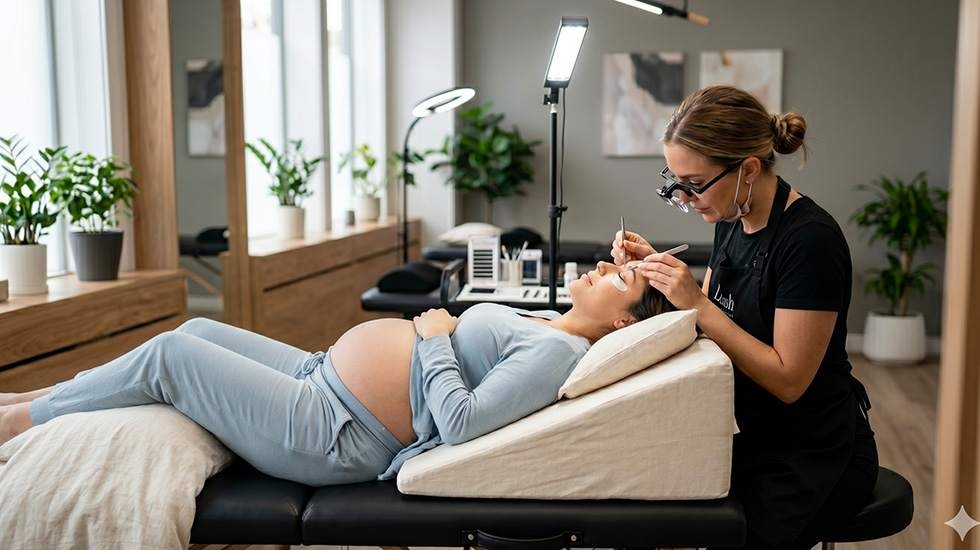
Professional lash salons in Dubai and across the UAE accommodate pregnant clients by utilizing contoured orthopedic wedge supports to elevate the back to at least 45 degrees, or by slightly tilting the left hip with a bolster to keep the vena cava fully open during appointments.
Are Lash Lifts and Brow Laminations Safe While Breastfeeding?
Postpartum hormonal drops (especially prolactin fluctuations during nursing) can still influence hair elasticity. However, from a pharmacological perspective, topically processed lash lotions have zero biological pathway to transfer into breast milk. Nursing mothers can proceed with appointments comfortably, provided proper salon air exchange is maintained.
Pregnancy-Safe Alternatives & Nourishing Daily Care
If you opt out of chemical processing during gestation, you can maintain lash density and follicle health through non-hormonal, botanical nourishment. Premium systems formulated by European laboratories like My Lamination prioritize hair restructuring without harsh alkalis.

Integrating pregnancy-safe beauty care products ensures active hydration. In particular, the prostaglandin-free My Lamination Vitamin Lash & Brow Serum (10ml) infuses natural hair shafts with vitamins A, B, C, E, and panthenol to safeguard lashes against postpartum shedding without synthetic chemical risks.
Frequently Asked Questions About Lash & Brow Safety During Pregnancy
Can I get a lash lift and tint while pregnant?
Yes, during the second trimester, a combined lash lift and tint is generally safe provided that mild, cysteamine-based perming lotions and non-ammonia tints are used. The formulas must never make contact with the eyelid skin, and a 48-hour patch test must be conducted prior to treatment.
Is brow lamination safe during the third trimester?
While brow lamination does not pose direct systemic risks to the fetus in the third trimester, lying flat on your back during service can induce supine hypotension. Furthermore, heightened skin sensitivity in late pregnancy increases the risk of chemical burns or severe contact dermatitis on the brow bone.
What should I do if I had a lash perm before realizing I was pregnant?
Do not be alarmed. Because lash perming solutions are applied to the external, non-vascularized hair shaft and are thoroughly cleansed off within an hour, systemic exposure is virtually non-existent. Inform your OB/GYN during your next routine prenatal appointment for reassurance.
Why is a 48-hour patch test mandatory during pregnancy even if I am an existing client?
Maternal immune adaptation alters antibody activity and histamine sensitivity. Formulas tolerated seamlessly before conception can trigger rapid contact allergies during gestation. A localized patch test behind the ear or on the inner arm confirms skin tolerance before any ocular application.
Final Medical Verdict: Making Empowered Beauty Choices
Preserving your personal wellness and beauty routine throughout pregnancy is entirely possible with informed, medically sound choices. While lash lifts offer a safe, contact-free profile when executed during the second trimester, brow laminations demand extra vigilance regarding dermal exposure. Always verify salon ventilation, insist on semi-reclined positioning after 20 weeks, and clear all cosmetic procedures with your physician.
Explore verified, premium cosmetic essentials and safety-tested beauty supplies trusted by licensed studios across Dubai and the UAE at Winlash Eyelash & Brow Supplies Dubai .