

Table of Contents (Click to Open)
- The Panic of Frosting: Why Does Lash Glue Turn White?
- Shock Curing vs. Blooming Effect Matrix
- The Molecular Science of Cyanoacrylate Polymerization
- Shock Curing: The Danger of Free Moisture Contamination
- The Blooming Effect: Volatile Monomer Vapor Accumulation
- Step-by-Step Prevention Protocol: Balancing Lash Micro-Climates
- Carbon Black Pigment Separation vs. Adhesive Frosting Physics
- Clear vs. Black Adhesives: Choosing the Right Chemical Lattice
- The Financial Toll of Brittle Bonds on Salon Retention
- FAQ: Advanced Adhesive Troubleshooting for Master Artists
You complete a flawless, micro-symmetrical volume set, only to look down and witness a lash artist’s ultimate horror: a chalky, stark white crust creeping across the base of the extensions. The immediate panic of asking why does lash glue turn white is a high-stakes defining moment that separates amateur technicians from master ocular architects. This unsightly frosting completely ruins the dark, dense aesthetic of premium sets, leaving clients frustrated and your salon's reputation vulnerable. To permanently eliminate this retention-killing anomaly, masters must look past basic application tips, invest in scientifically formulated eyelash extension glue and liquids, and dive deep into the precise chemical physics of cyanoacrylate curing dynamics.
Executive Brief: Managing Cyanoacrylate Curing Pathologies
White residue on professional eyelash extensions is never a random manufacturing defect; it is a direct biological and environmental consequence of unmanaged polymerization physics. In the intense, variable-humidity climate of Dubai, lash artists frequently misdiagnose this phenomenon. The white chalky substance manifests via two completely separate chemical pathways: shock curing lash extensions (instantaneous liquid water contact) and the cyanoacrylate blooming effect (delayed precipitation of volatile monomer vapors). Understanding these molecular boundaries allows elite salons to deploy targeted chemical interventions—specifically advanced moisture pre-calibration and rapid polymer chain sealing—ensuring clean, jet-black bonds with absolute structural flexibility.
Shock Curing vs. Blooming Effect Matrix
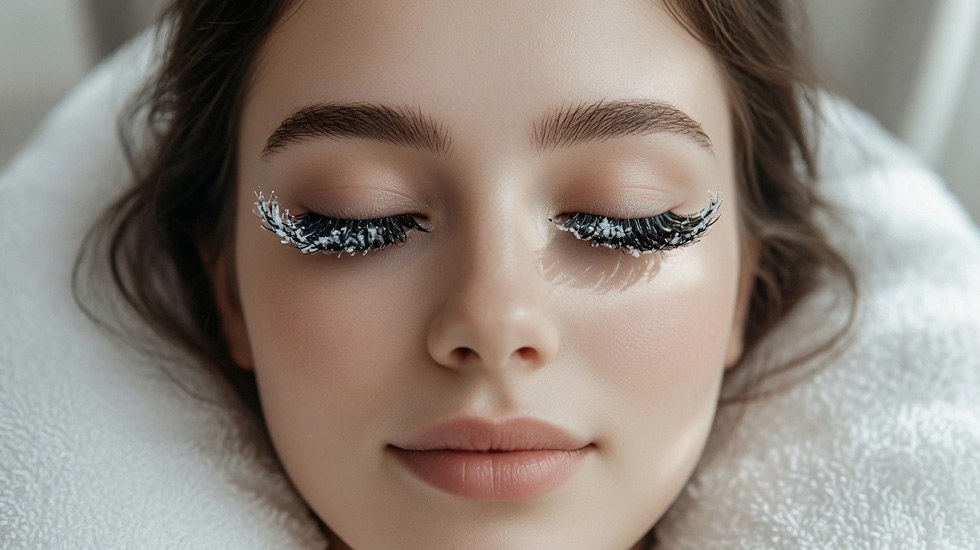
To establish a flawless troubleshooting protocol, an experienced technician must instantly recognize whether they are dealing with an instantaneous kinetic shock or a delayed vapor condensation. Use this definitive architectural matrix to diagnose the exact chemical failure occurring on the lash line:
| Feature | Shock Curing | Blooming Effect |
|---|---|---|
| Primary Root Cause | Direct, sudden exposure of liquid adhesive to uncalibrated free moisture or liquid water droplets. | Accumulation, stagnation, and subsequent condensation of volatile monomer vapors on wet adhesive. |
| Temporal Onset | Instantaneous (occurs within seconds of improper moisture or liquid contact during the set). | Delayed (manifests several hours later, often after the client has left the salon environment). |
| Physical Morphology | Thick, dense, rough, and highly visible chalky-white structural layer directly at the adhesive base. | Fine, powdery, soft frosted mist or superficial white dust coating the extension fibers. |
| Engineered Solution | Pre-application lipid and moisture balancing using high-purity chemical primers. | Instant polymer-chain encapsulation and vapor neutralization via advanced chemical bonders. |
The Molecular Science of Cyanoacrylate Polymerization
Professional lash extensions rely entirely on ethyl-cyanoacrylate, an acrylic monomer that remains liquid inside the bottle due to acidic stabilizers. When expelled onto a jade stone or glue ring, it requires a weak base—specifically the microscopic moisture layer naturally present in ambient air and on the human eyelash cuticle—to initiate anionic polymerization.
During a healthy cure, these individual monomers link together to form long, organized polymer chains, creating a strong, crystal-clear, and flexible solid matrix. However, if the kinetic speed of this chemical reaction is thrown out of equilibrium by excessive environmental moisture or unmanaged vapor release, the polymer chains form chaotically. This molecular disarray compromises the physical integrity of the bond and refracts light differently, showing up as a white, frosted blemish.
Shock Curing: The Danger of Free Moisture Contamination
When a lash artist encounters true shock curing, they are witnessing a violent, unchecked chemical reaction that instantly severely degrades lash retention. This pathology occurs when liquid water or an excess of free moisture collides directly with unpolymerized ethyl-cyanoacrylate adhesive. A classic example is utilizing a traditional nano mister too close to the face (within 30cm) or too quickly after completing a set, resulting in heavy water droplets resting on the extensions, causing a severe nano mister shock. However, in high-end salons, this is also frequently triggered by a client's tearing eyes due to cyanoacrylate fumes, or micro-condensation caused by faulty salon air conditioning units blasting cold air onto a warm face.
The physics behind this failure rests on capillary action and rapid surface tension shifts. The sudden rush of liquid water molecules forces the outer layer of the cyanoacrylate drop to polymerize instantly. Because this outer shell hardens in milliseconds, it creates an impermeable barrier that traps unlinked, wet volatile monomers and gasses beneath it. The trapped internal pressure breaks the expanding polymer lattice from within. Instead of forming a smooth, transparent crystalline structure, the adhesive crystallizes into a highly brittle, chalky white shield that completely loses its tensile strength and structural flexibility. This causes total mechanical bond failure, leading to immediate lash shedding within 24 to 48 hours.
The Blooming Effect: Volatile Monomer Vapor Accumulation
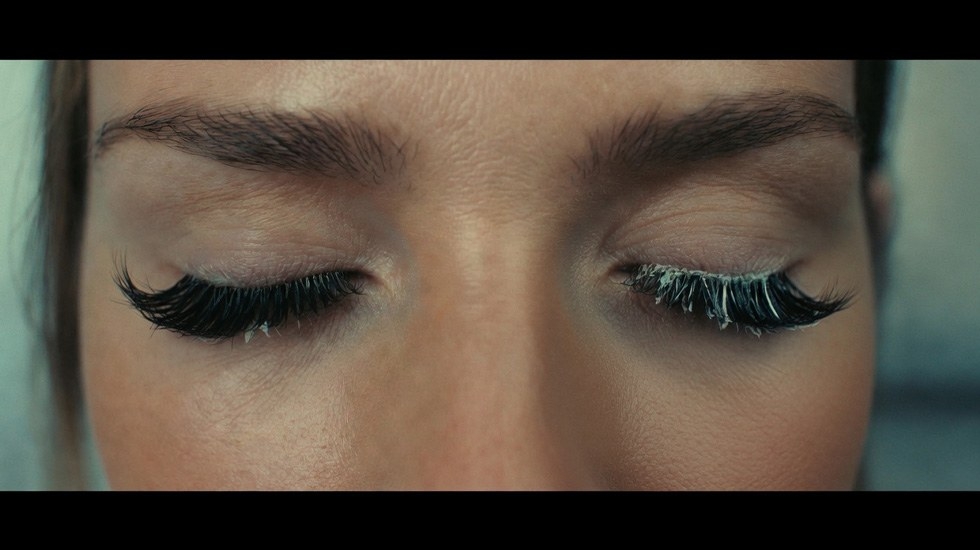
Conversely, the cyanoacrylate blooming effect is a subtle, atmospheric phenomenon driven by unmanaged vapor pressure dynamics. Cyanoacrylate monomers are highly volatile, meaning they readily evaporate into the ambient air as volatile monomer vapors while the liquid glue bead is slowly curing. If the ambient relative humidity (RH) in your salon is too low (below 40%), or if you use an excessive volume of adhesive on a single volume fan, the drying and cross-linking process slows down significantly, leaving the outer layer of the glue wet and exposed for an extended period.
As these gaseous monomers hover directly above the natural lash line due to inadequate salon ventilation, they slowly seek out moisture sources in the immediate micro-climate. Once they locate airborne moisture, they undergo a mid-air polymerization process, condense into microscopic solid particles, and gently precipitate back down onto the adjacent areas. This creates a fine, powdery, frosted coating across the mid-lengths and tips of the extensions, rather than just at the base. It perfectly explains the classic industry mystery: why a lash set can look completely black, clean, and flawless when the client leaves your chair, but appears covered in a white mist by the time they wake up the next morning.
Step-by-Step Prevention Protocol: Balancing Lash Micro-Climates
Eliminating white residue from your professional career requires transitioning from reactive troubleshooting to an advanced, engineering-focused application protocol. Controlling your salon's micro-climate (ideal range: 45–60% humidity and 20–22°C temperature) is crucial, but managing the chemical properties of the natural follicle is where master retention is won. Follow this systematic chemical management routine to guarantee deep obsidian retention:
- Step 1: Calibrate the Cuticle with a Dedicated Lash Primer: To master how to prevent lash glue turning white, you must first normalize the surface moisture of the natural lash. Natural lashes carry highly unpredictable ratios of sebum, cellular debris, and intracellular moisture. Applying a fast-curing adhesive to an uncalibrated cuticle triggers a chaotic moisture shock. By pre-treating the lash line with a high-purity lash primer, you strip away problematic surface lipids while perfectly balancing the natural moisture baseline. This clean preparation ensures a smooth, highly uniform anionic polymerization the exact millisecond your extension fan contacts the follicle.
- Step 2: Instant Vapor Encapsulation with an Advanced Bonder: The true hero of modern lash chemistry is the immediate post-application sealant. Relying on outdated training manuals that force clients into a strict 24-hour water quarantine is a major operational risk, especially in the humid Gulf region. The moment you finish applying your last extension, apply a micro-drop of a specialized bonder directly onto the bond zones using a micro-brush. This solution initiates an immediate, highly controlled polymerization of the adhesive from the inside out, completely locking down volatile monomer vapors within 3 minutes. With no escaping vapors, the blooming effect is physically blocked from forming, while the cyanoacrylate matrix gains elite structural flexibility, instantly rendering the set 100% waterproof.
Carbon Black Pigment Separation vs. Adhesive Frosting Physics
Often confused with environmental blooming, carbon black pigment separation is another severe chemical pitfall that destroys the deep appearance of professional sets. High-end black adhesives get their rich obsidian depth from microscopic carbon black particles mechanically suspended within the clear cyanoacrylate liquid matrix. Because these pigment particles have a higher density than the liquid monomers, they naturally settle at the bottom of the bottle when left static.
If a technician fails to shake the adhesive bottle thoroughly (ideally for 60 seconds manually or using a mechanical glue shaker) before dispensing a drop, they will primarily express clear cyanoacrylate with an inadequate concentration of pigment. When this poorly blended, low-viscosity solution interacts with ambient humidity, it undergoes a phase separation. This structural imbalance magnifies the visual impact of any minor frosted lash extensions, leaving behind a mottled, dull greyish-white base. Utilizing a molecularly stable, highly homogenized formula like eyelash extension glue black 5ml provides a uniform particle suspension that strongly resists phase separation even under extreme environmental stress.
Clear vs. Black Adhesives: Choosing the Right Chemical Lattice
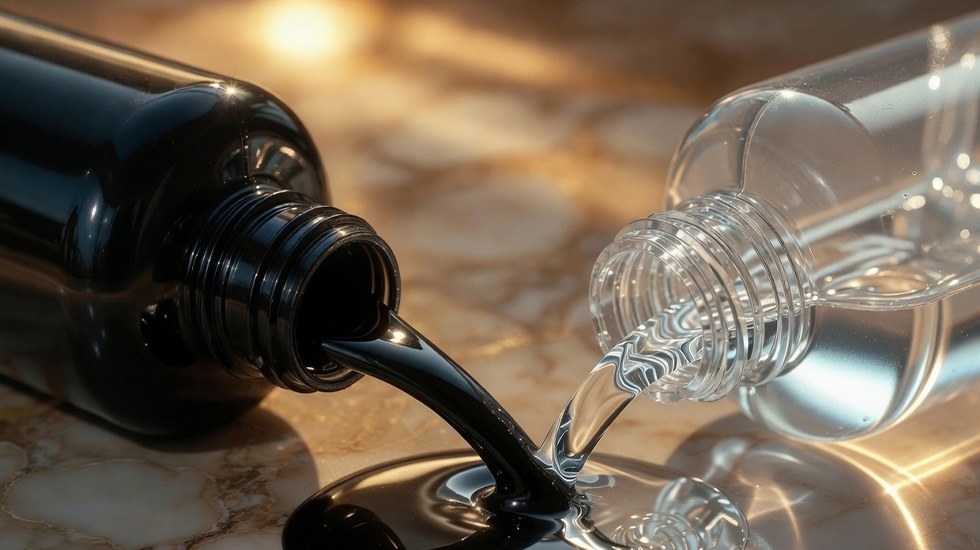
For avant-garde styling, colored lash sets, or clients presenting with extreme chemical sensitivities to carbon black pigment, transitioning to a clear adhesive lattice is an excellent alternative. While clear glue completely removes the risk of pigment separation, many master artists falsely assume it is immune to aesthetic defects. In fact, clear cyanoacrylate lacks the stabilizing thermal mass that carbon black particles provide, which can sometimes make its curing speed slightly more unpredictable under sudden humidity drops or spikes.
In reality, clear cyanoacrylate is equally susceptible to both shock curing and blooming if moisture and vapors are poorly managed. When a clear adhesive shocks, it loses its seamless clarity and turns into an opaque, highly reflective white bead that looks messy and unrefined. For ultra-clean styling or colored contact lens coordination, utilizing a premium eyelash extension glue white (clear formulation) provides a pristine, translucent bond line—giving you complete aesthetic safety, provided your advanced priming and bonding protocols are rigorously followed.
The Financial Toll of Brittle Bonds on Salon Retention
In a luxury beauty market where clients demand flawless execution, white residue is more than a visual blemish—it is a financial leak. Brittle, moisture-shocked bonds lead to premature lash shedding, triggering emergency fix-it appointments that drain your salon's time and resources. By modernizing your workspace chemistry with calculated priming and instant vapor neutralization, you shift your salon into a premier bracket of multicultural excellence.
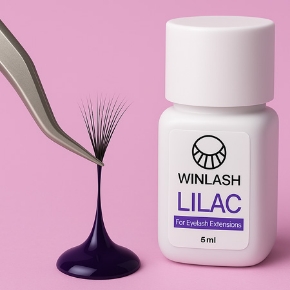
Elevate your professional toolkit from basic adhesives to advanced chemical solutions. Explore the complete range of master-grade liquids, primers, and specialized adhesives at WinLash, and redefine your lash retention standards today.
FAQ: Advanced Adhesive Troubleshooting for Master Artists
Can I safely use a nano mister without triggering a kinetic shock?
Yes, but it requires strict calibration. Wait 3 minutes post-set, hold the device 40cm away, and mist for under 15 seconds. To eliminate this kinetic risk entirely, replacing misting devices with an advanced chemical bonder is highly recommended.
How does extreme outdoor humidity accelerate the delayed blooming effect?
Stepping into high humidity creates a sudden vapor pressure shift. Uncured, volatile monomers violently evaporate from the wet adhesive core, polymerize instantly in the damp air, and fall back onto the extensions as a white, powdery frost.
Can frosted lash extensions be fixed, or do they require a complete removal?
Mild blooming (powdery dust) can be masked by re-hydrating the surface with a micro-brush of primer. However, structural shock curing (thick, brittle crust) permanently fractures the bond lattice, requiring immediate removal and replacement of the affected fans.