

Entrusting a pair of razor-sharp stainless steel tweezers and fast-curing cyanoacrylate adhesive within millimeters of the human cornea requires far more than artistic flair—it demands rigorous anatomical precision. A modern lash technician acts as an ocular architect, balancing facial geometry, natural hair growth cycles, and polymer chemistry to enhance the eyes safely. Whether you are an aspiring beauty entrepreneur assembling your first professional station, an independent specialist refining your retention rates, or a client evaluating treatment standards, understanding this craft is critical. From bespoke fiber mapping to chemical curl restructuring with professional lash and brow lift products, true mastery relies on technical discipline and clinical hygiene.
Quick Access Table of Contents (Click to Open)
- What Is a Lash Technician? Core Role & Industry Scope
- Service Architecture Matrix: Extensions, Clusters & Lash Lifts
- The Science of Follicle Health & Precision Application
- Essential Lash Tech Supplies: Building a Professional Kit
- Certification, Licensing & Career Pathways in the UAE
- Ocular Safety, Contraindications & Client Waiver Protocols
- Lash Tech Pricing Models & Client Consultation Standards
- FAQ: Lash Technician Career, Certification & Kit Essentials
Executive Brief: The Anatomy of a Modern Eyelash Specialist
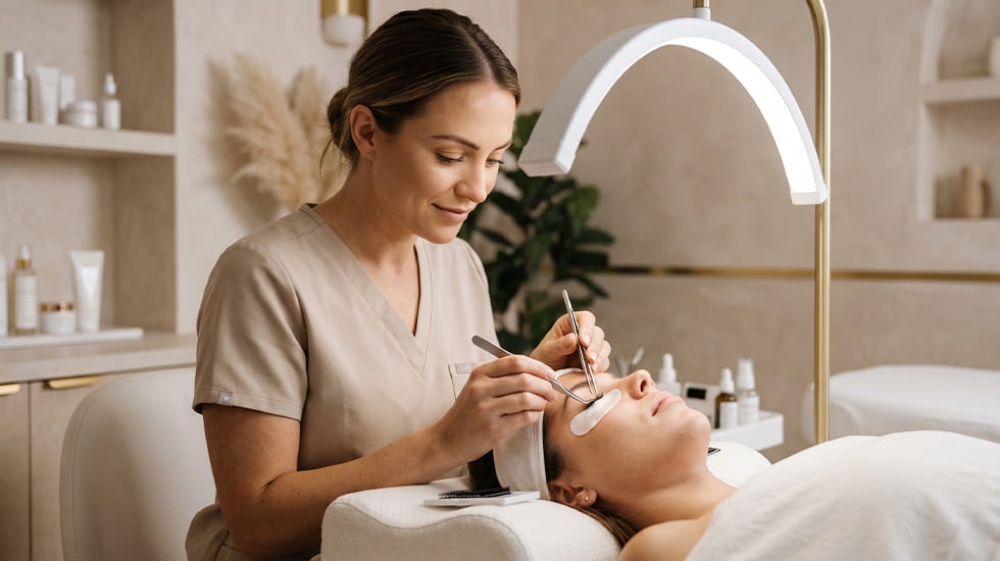
An eyelash technician (commonly referred to as a lash tech or eyelash extension specialist) is a trained beauty practitioner specializing in semi-permanent eyelash enhancements, natural lash keratin lifts, and ocular hygiene maintenance. Unlike general estheticians, a certified lash specialist masters single-follicle isolation, weight-to-length load calculations, and environmental humidity control to prevent premature shedding or traction alopecia. In competitive beauty hubs like Dubai and Abu Dhabi, professional success depends on formal certification, strict adherence to client contraindication screening, and curating high-purity synthetic fibers and medical-grade adhesives.
What Is a Lash Technician? Core Role & Industry Scope
Direct Answer: A lash technician is a specialized beauty professional trained to customize, apply, maintain, and safely remove eyelash extensions and lash lift treatments. Their primary responsibilities include analyzing eye symmetry, isolating individual natural lashes, calculating safe extension weights, and enforcing strict sanitation protocols to protect ocular surface health.
Over the past decade, the beauty industry has shifted away from generalized salon services toward hyper-specialized ocular artistry. Today, clients searching for a qualified eyelash extension technician expect tailored architectural styling—such as Cat-Eye, Squirrel, Doll-Eye, or Wispy Textured sets—rather than uniform, heavy strips. Whether operating inside a luxury clinic, working as a freelance mobile lash tech, or practicing from a dedicated home studio, a technician's daily workflow spans three core pillars:
- Anatomical Mapping & Consultation: Assessing eyelid crease depth, brow bone prominence, and natural lash growth direction (upward, straight, or downward-pointing) to select optimal curls (J, B, C, CC, D, L, or M) and lengths (6mm to 15mm).
- Micro-Precision Application: Executing clean 1:1 isolation so that each synthetic extension or handmade volume fan bonds exclusively to a single mature natural eyelash, sitting precisely 0.5mm to 1.0mm away from the eyelid margin.
- Maintenance & Safe Removal: Performing 2-to-3-week infills to replace outgrown extensions and utilizing cream or gel removers to dissolve cyanoacrylate bonds without mechanical pulling.
Service Architecture Matrix: Extensions, Clusters & Lash Lifts
Direct Answer: Professional lash technicians deliver four primary service modalities: 1:1 Classic extensions for natural definition, Multi-Dimensional Volume sets for dense fluff, Express Cluster lashes for short-term event wear, and Chemical Lash Lifts for semi-permanent natural curl elevation without added synthetic fibers.
Understanding the structural differences between these services helps both buyers selecting supplies and clients booking appointments choose the right technique. Compare the core operational parameters across each treatment category below:
| Service Technique | Application Ratio & Fiber Type | Retention & Infill Cycle | Ideal Candidate Profile |
|---|---|---|---|
| Classic Lash Extensions | 1 synthetic fiber (0.12mm–0.15mm) bonded to 1 isolated natural lash. | 4–6 weeks full cycle; infills every 2–3 weeks. | Clients with healthy, dense natural lashes seeking mascara-like length. |
| Russian & Mega Volume | 2 to 15+ ultra-fine PBT fibers (0.03mm–0.07mm) fanned onto 1 natural lash. | 5–6 weeks full cycle; infills every 3 weeks. | Sparse natural lashes or clients desiring dramatic, dark lash-line density. |
| Express Cluster Lashes | Pre-grouped multi-strand segments applied along the lash band/under-lash. | 5–10 days (short-term wear; requires timely removal). | Bridal events, vacations, or quick DIY/salon styling sessions. |
| Keratin Lash Lift & Tint | No extensions; thioglycolate/cysteamine lotions reshape natural disulfide bonds. | 6–8 weeks (grows out naturally with shed cycle). | Low-maintenance clients with straight or downward-growing natural lashes. |
Mastering full-set artistry starts with curating heat-set Korean PBT eyelash extensions that resist thermal flattening. Beginners typically build foundational muscle memory using classic eyelash extensions to perfect 1:1 isolation before advancing to hand-fanned volume sets. Meanwhile, for rapid event styling or flexible at-home beauty routines, learning how to apply cluster lashes cleanly along the sub-lash line offers an efficient alternative to two-hour salon appointments.
The Science of Follicle Health & Precision Application
Direct Answer: Protecting natural lash health requires matching extension mass to the natural hair's growth phase and avoiding "stickies" (adjacent lashes glued together). Because anagen baby lashes grow rapidly, bonding two hairs together creates mechanical tension that pulls immature follicles out prematurely, causing permanent traction alopecia.
Human eyelashes follow an asynchronous three-stage growth cycle lasting roughly 60 to 90 days: the active growth phase (Anagen), the transitional regression phase (Catagen), and the resting/shedding phase (Telogen). On average, a healthy adult naturally sheds 2 to 5 eyelashes per eye every day.
A scientifically trained lash technician inspects each follicle under high-lumen task lighting before placing an extension. Fragile anagen lashes are left untouched or fitted with ultra-lightweight 0.03mm fans, while sturdy catagen and telogen hairs support full architectural loads. Furthermore, maintaining a strict 0.5mm–1.0mm gap from the epidermis prevents mechanical poking, blocked meibomian glands, and localized skin sensitization.
Essential Lash Tech Supplies: Building a Professional Kit
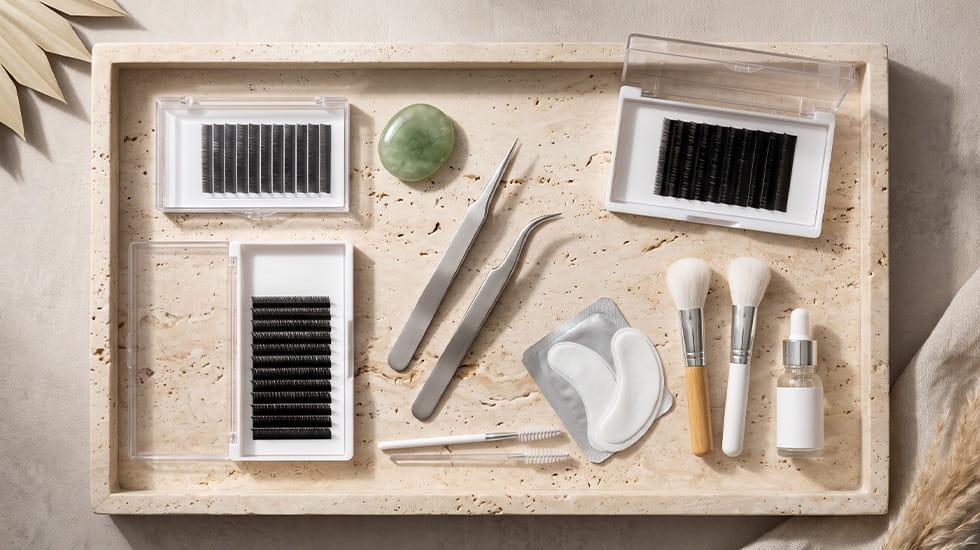
Direct Answer: A complete lash tech essentials kit includes four non-negotiable categories: medical-grade stainless steel isolation and volume tweezers, humidity-matched cyanoacrylate adhesives with primers and bonders, non-porous Korean PBT lash trays in mixed lengths, and pH-balanced eyelid cleansers with hydrogel eye pads.
Whether you are a beginner lash tech shopping for your first starter kit or an established artist restocking high-turnover consumables, tool precision directly dictates your speed and retention. Every functional station relies on these core lash tech needs:
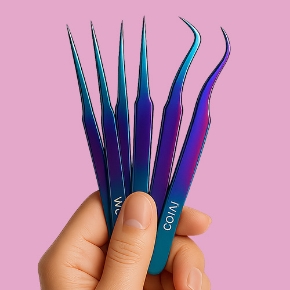
- Surgical-Grade Isolation & Volume Tweezers: You need at least two dedicated instruments per client—a fine-tipped straight or curved tweezer to separate single natural hairs, and a calibrated boot or fiber-tip tweezer for pickup. Investing in balanced tweezers and scissors prevents wrist strain and eliminates fan slippage during multi-hour sessions.
- Climate-Calibrated Adhesives & Sealants: Cyanoacrylate glues polymerize via ambient moisture. Stocking fast-drying formulas (0.5–1 second) alongside moisture-balancing primers and vapor-locking super bonders from a dedicated eyelash extension glue and liquids range ensures consistent 6-week retention even in humid coastal climates.
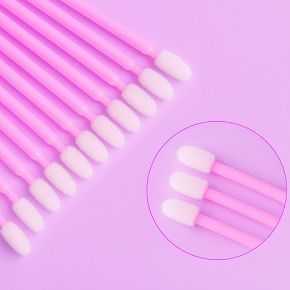
- Pre-Treatment Cleansers & Removers: Natural sebum, sunscreen, and makeup residue create a hydrophobic barrier that repels glue. Foaming lash shampoos, micro-swabs, lint-free hydrogel patches, and cream removers within your beauty care products lineup keep the lash line sterile and oil-free.
- Environmental Monitoring & Lighting: A digital hygrometer/thermometer to track room humidity (ideally 45%–60% RH) paired with a shadowless half-moon LED lamp to illuminate fine blonde or translucent natural lashes.
Certification, Licensing & Career Pathways in the UAE
Direct Answer: Becoming a certified lash technician requires completing accredited theoretical and practical training covering ocular anatomy, sanitation, and live-model application. In the UAE and international markets, practicing commercially in a salon or freelance capacity additionally requires obtaining a valid trade license, municipal health approvals, and professional liability coverage.
Because eyelash extensions involve chemical adhesives near the eyes, regulators and informed clients strictly distinguish between self-taught hobbyists and a certified lash technician. A credible qualification pathway follows a structured progression:
- Foundational Classic Certification: Intensive training on mannequin heads and live models focusing on isolation accuracy, adhesive dip control (2mm micro-bead), and safe removal.
- Advanced Volume & Styling Mastery: Specialized coursework in Russian volume fan symmetry, weight calculation, and corrective mapping for hooded, monolid, or downturned eyes.
- Commercial Licensing & Compliance: For technicians operating in Dubai or across the Emirates, registering under a relevant beauty salon license or authorized freelance permit (such as DED or free zone beauty permits) ensures full compliance with local health and safety inspections.
Ocular Safety, Contraindications & Client Waiver Protocols
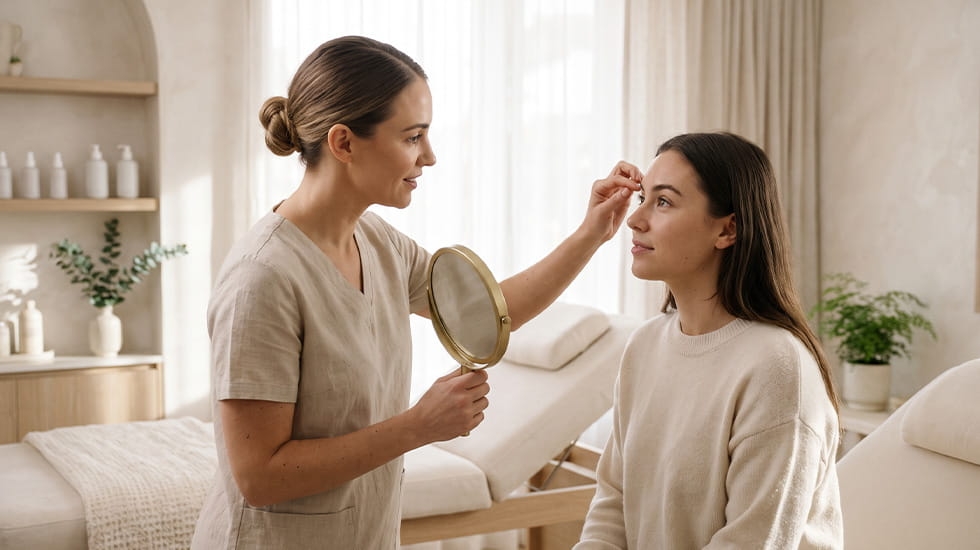
Direct Answer: Lash extensions are cosmetic enhancements, not medical treatments, and must never be applied over active eye infections, open eyelid lesions, or recent ocular surgeries. Every technician must administer a mandatory client consultation and lash tech waiver form alongside a 48-hour patch test for sensitive individuals.
Clinical ophthalmology literature indexed on platforms like PubMed highlights that improper lash hygiene and trapped adhesive vapors are leading causes of cosmetic blepharitis and ocular surface irritation. To protect client health and insulate your practice from liability, enforce these strict medical and safety boundaries:
- Absolute Contraindications (Do Not Apply): Active conjunctivitis (pink eye), styes (hordeolum), severe untreated blepharitis, demodex mite infestations, trichotillomania, active chemotherapy, or ocular surgery (LASIK, cataract, or blepharoplasty) within the past 6 months without written ophthalmologist clearance.
- Allergy vs. Chemical Irritation Screening: Technicians must recognize the difference between temporary corneal redness caused by adhesive fumes and true type-IV immune contact dermatitis. Review our clinical diagnostic breakdown on lash extension allergy vs. irritation to handle reacting clients safely and determine when immediate removal is mandatory.
- The Lash Tech Waiver Form & Patch Test: Before touching a client's lashes, have them sign a comprehensive intake and consent form documenting allergies, contact lens removal, and aftercare obligations. For first-time or sensitive clients, apply 3 to 5 short extensions per eye 48 hours prior to a full set to monitor for delayed histaminic swelling.
Lash Tech Pricing Models & Client Consultation Standards
Direct Answer: Lash technician pricing is structured around service complexity, appointment duration (typically 90 to 150 minutes for full sets), technician experience level, and raw material purity. Infills at 2-to-3-week intervals generally cost 40% to 55% of a full-set price, provided at least 40% of the extensions remain intact.
Clients comparing lash tech prices across Dubai and the wider UAE should evaluate value through safety and retention rather than bargain rates. Unusually cheap full sets often indicate rushed application without proper isolation, heavy low-grade polyester fibers, or uncalibrated glues that lead to painful clumping and rapid fallout. Conversely, transparent consultations—where the technician explains curl geometry, maps out symmetrical zones, and provides a dedicated cleansing brush for daily washing—justify premium pricing and build long-term client loyalty.
Whether you are launching your career as a certified specialist or upgrading your personal styling kit with salon-grade tools, precision starts with superior raw materials. Explore our complete catalog of Korean PBT lash trays, calibrated adhesives, and ergonomic tweezers at WinLash and elevate every lash set you create.
FAQ: Lash Technician Career, Certification & Kit Essentials
1. How long does a full eyelash extension appointment take with a certified lash tech?
A thorough full set typically takes between 90 and 150 minutes, depending on the client's natural lash density and chosen style (Classic vs. Mega Volume). Because a skilled technician isolates and bonds 80 to 140 individual lashes per eye, rushing the process under 60 minutes usually compromises isolation and causes painful lash sticking.
2. What is the difference between a certified lash technician and a licensed esthetician?
A licensed esthetician holds a broader skincare qualification covering facials, waxing, and skin physiology, whereas a certified lash technician has completed specialized training focused specifically on eyelash extension mechanics, adhesive chemistry, and eye mapping. In many jurisdictions, technicians hold both a general beauty or salon license and specialized lash certifications.
3. What are the most important supplies a beginner lash tech should buy first?
Beginners should prioritize a balanced pair of isolation and volume tweezers, mixed-length C and CC curl classic lash trays (0.12mm and 0.15mm), a medium-speed adhesive (1–2 seconds drying time) suited to slower placement speeds, a gentle foaming cleanser, and lint-free gel eye pads. Practicing on mannequin heads before live models builds clean isolation habits.
4. How often should clients wash their eyelash extensions at home?
Clients should cleanse their lashes daily using an oil-free, pH-balanced foaming lash shampoo and a soft cleansing brush. Daily washing removes dead skin cells, sebum, and airborne dust from the lash line, preventing blepharitis and extending adhesive retention by up to two weeks.